8 Effective Workforce Planning Methods for 2025
- Talent People

- Jul 30, 2025
- 15 min read
Reacting to talent needs is a recipe for falling behind in a competitive market. Proactive, strategic workforce planning is no longer a luxury reserved for large corporations; it's a critical function for any organisation aiming for sustainable growth, particularly in dynamic sectors like energy and technology. The right approach ensures you have the right people, with the right skills, in the right roles, precisely when you need them to deliver on your business objectives.
However, with numerous methodologies available, choosing the most effective one can feel overwhelming. This guide simplifies that decision by breaking down eight proven workforce planning methods. It provides a clear, actionable roadmap to help you build a resilient, future-ready team capable of navigating market shifts and seizing new opportunities.
We will explore each method in detail, moving from foundational techniques like Gap Analysis and Succession Planning to modern, data-driven approaches such as Predictive Analytics and Agile Workforce Planning. You will gain a clear understanding of how each method works, its specific benefits and drawbacks, and how to implement it within your own organisation. This is your practical guide to turning talent management from a reactive cost centre into a strategic driver of success.
1. The Foundational Approach: Gap Analysis Method
As one of the most fundamental workforce planning methods, Gap Analysis provides a clear, structured way to compare your current workforce with your future business needs. It's a systematic approach that identifies the "gap" between where you are and where you need to be in terms of skills, competencies, and overall headcount.
This method forces organisations to look beyond immediate hiring needs and align their talent strategy directly with long-term business objectives. By quantifying the differences between your current state and desired future state, you can create targeted, effective strategies to ensure you have the right people with the right skills at the right time.
How Gap Analysis Works
The process involves a straightforward comparison. First, you conduct a thorough audit of your current workforce's skills, roles, and performance levels. Next, you work with business leaders to define the capabilities your company will require to meet its strategic goals in the next one to five years. The difference between these two points reveals your talent gaps.
For example, a healthcare system preparing for an ageing population might use this method to discover a future shortage of geriatric nurses and specialised care providers. Similarly, as IBM pivoted towards AI and cloud computing, a gap analysis revealed a critical need for new technical skills, prompting a massive skills-based transformation initiative.
The following infographic illustrates the core sequence of the Gap Analysis method.
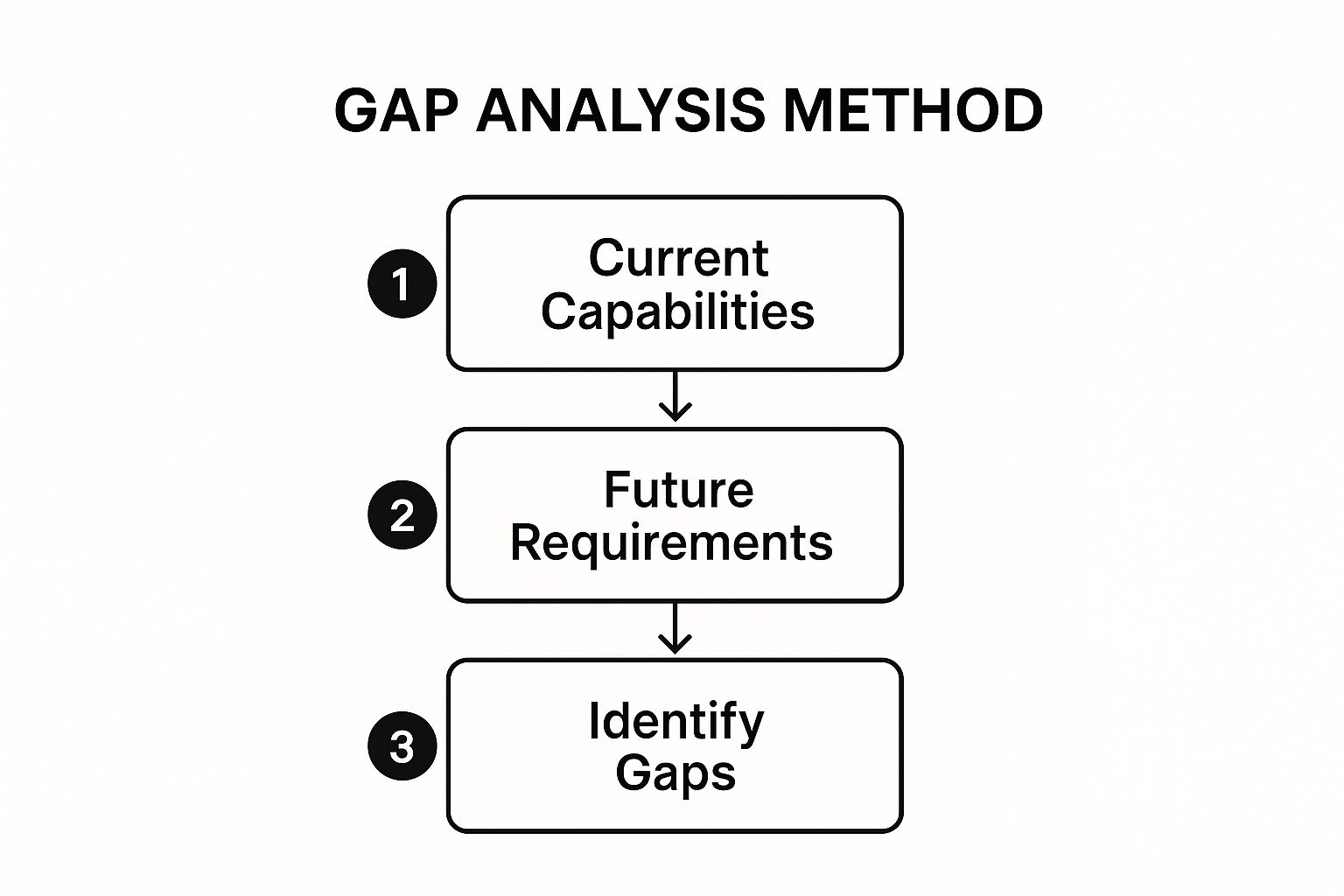
This simple flow from assessing the present to defining the future is what makes gap analysis a powerful starting point for any strategic workforce plan.
Actionable Tips for Implementation
To make your gap analysis effective, consider the following:
Prioritise Gaps: Not all gaps are equal. Prioritise them based on their potential impact on business goals and the urgency required to close them.
Use Diverse Data: Combine quantitative data (headcount, attrition rates) with qualitative data (performance reviews, skills assessments) for a complete picture of your current state.
Involve Leadership: Ensure business leaders are deeply involved in defining future requirements. Their vision for strategic growth is essential for an accurate analysis.
Analyse Both Hard and Soft Skills: Technical abilities are crucial, but don't overlook soft skills like leadership, communication, and adaptability, which are often harder to develop.
2. The Forward-Looking Approach: Scenario Planning Method
In an uncertain business world, Scenario Planning offers a dynamic way to prepare your workforce for multiple plausible futures. This strategic method moves beyond a single forecast, instead developing several distinct scenarios - such as a best case, worst case, and most likely outcome - to anticipate a range of potential challenges and opportunities.
This approach builds organisational resilience and agility. Rather than being caught off guard by market shifts, geopolitical events, or technological disruptions, companies can proactively model the workforce implications for each scenario. This allows for the creation of flexible talent strategies that can be adapted quickly as the future unfolds, making it one of the most robust workforce planning methods available.
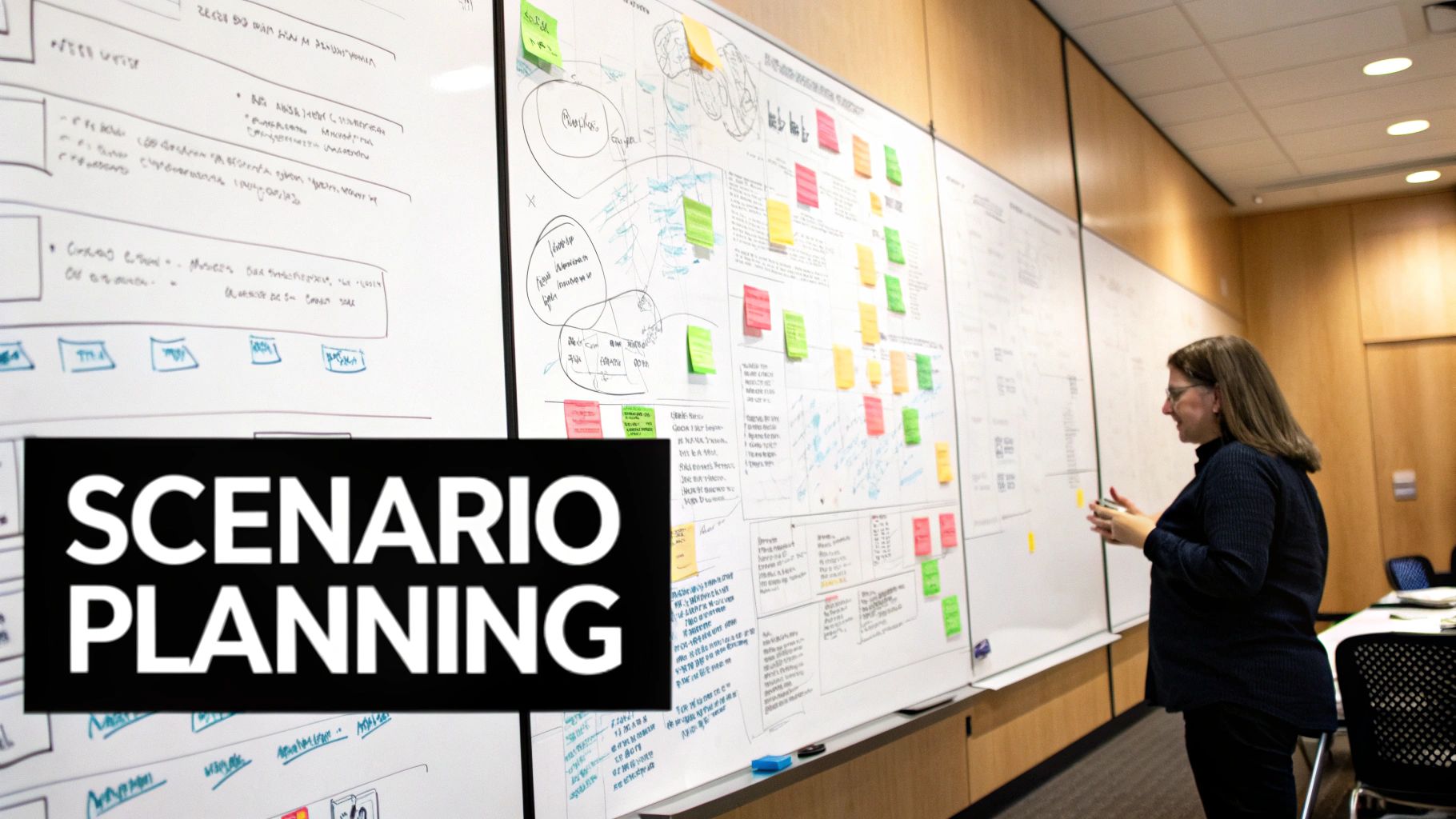
How Scenario Planning Works
The process involves identifying key uncertainties and drivers of change facing your organisation. You then construct a handful of detailed, narrative-based scenarios based on how these drivers might play out. For each scenario, you analyse the impact on business strategy and, consequently, on talent needs-including skills, headcount, and organisational structure.
For example, energy giant Shell famously used scenario planning to navigate the oil crises of the 1970s and now uses it to plan its workforce for the transition to renewable energy. Similarly, airlines used this method to model vastly different recovery timelines post-pandemic, creating distinct plans for pilot recruitment, cabin crew training, and ground staff levels depending on which scenario materialised.
Actionable Tips for Implementation
To implement scenario planning effectively, follow these key steps:
Focus on a Few Key Scenarios: Avoid complexity by concentrating on 3-4 well-developed and plausible scenarios rather than creating too many, which can dilute focus.
Involve Diverse Stakeholders: Bring together leaders from finance, operations, marketing, and technology to create richer, more realistic scenarios that reflect the entire business.
Define Clear Triggers: For each scenario, establish specific triggers or signposts (e.g., a certain market share, a new regulation) that signal it is becoming a reality, prompting you to activate the corresponding plan.
Update Scenarios Regularly: The future is not static. Revisit and revise your scenarios at least annually or whenever significant new information emerges to ensure they remain relevant.
3. The Predictive Analytics Method
The Predictive Analytics Method moves workforce planning from reactive to proactive, using data to forecast future trends instead of just responding to them. This sophisticated, data-driven approach uses statistical algorithms, machine learning, and historical data to forecast everything from employee turnover and performance to future skill requirements with remarkable accuracy.
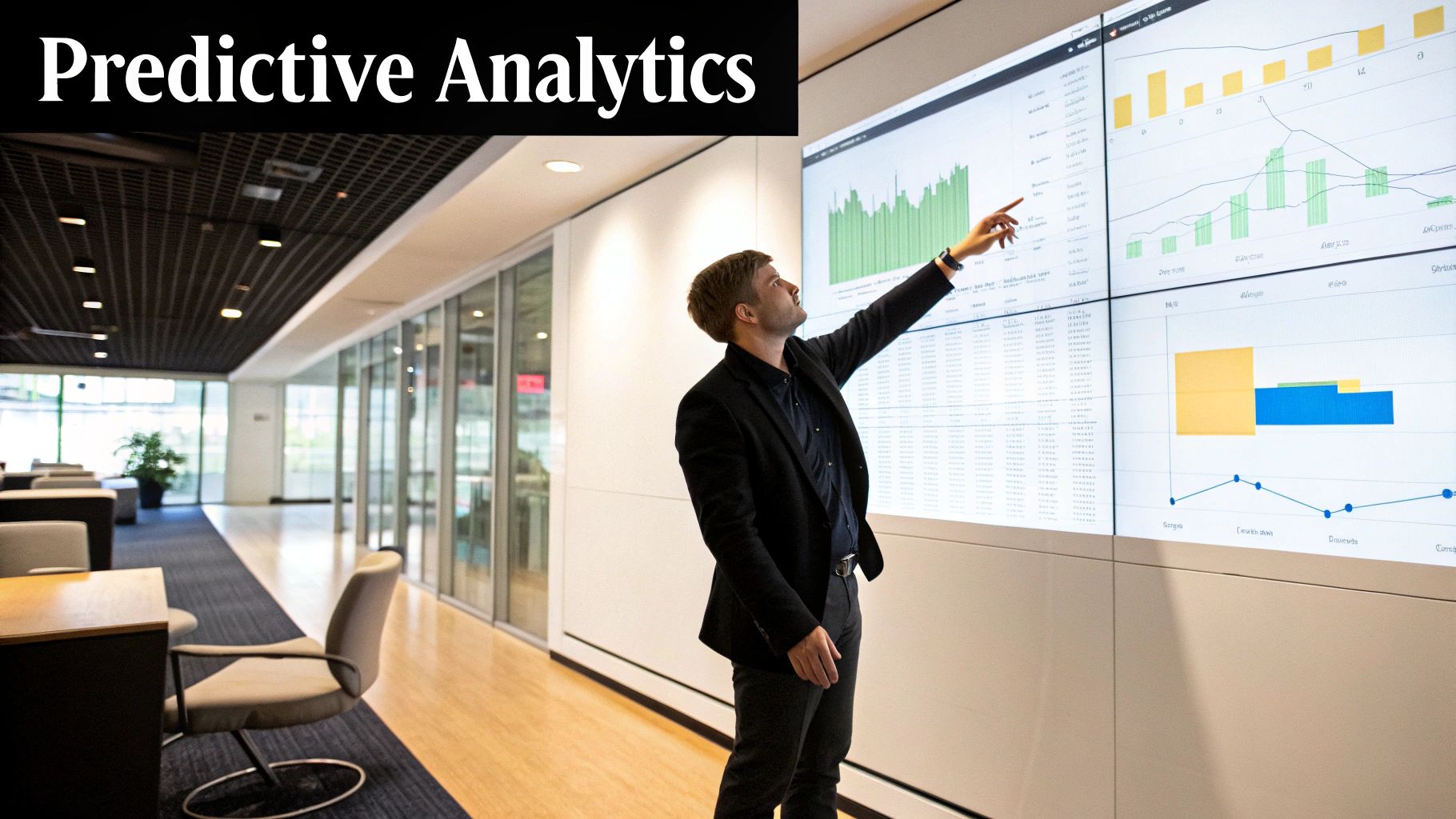
Popularised by tech giants and HR technology platforms, this method allows organisations to make smarter, evidence-based talent decisions. Instead of guessing who might leave or which skills will be needed, predictive models can identify at-risk talent, pinpoint the attributes of high-performers, and anticipate workforce needs before they become critical issues.
How Predictive Analytics Works
This method involves collecting and analysing vast amounts of historical and current employee data to build statistical models. These models identify patterns and correlations that can predict future outcomes. The process starts with a specific business question, such as "Which of our high-performing employees are most likely to leave in the next six months?"
For example, Google’s famous People Analytics team built algorithms to identify employees at risk of attrition, allowing managers to intervene proactively. Similarly, global consumer goods company Unilever has integrated AI and predictive analytics into its recruitment process to identify candidates who are most likely to succeed in their roles, streamlining hiring and improving quality.
By analysing variables like tenure, performance ratings, compensation history, and promotion frequency, the model generates a probability score for future events, guiding strategic interventions.
Actionable Tips for Implementation
To effectively integrate predictive analytics into your workforce planning methods, consider these steps:
Start with Clean Data: The accuracy of your predictions depends entirely on the quality of your data. Ensure your historical HR data is clean, comprehensive, and well-organised before you begin.
Begin with Simple Models: Don't jump straight to complex machine learning. Start with simpler predictive models, such as regression analysis for turnover, to build internal capabilities and demonstrate value.
Regularly Validate Models: A model's accuracy can degrade over time as business conditions change. Regularly test and validate your models against actual outcomes to ensure they remain relevant and reliable.
Combine Insights with Human Judgement: Predictive analytics should augment, not replace, human decision-making. Use the model’s insights to inform strategic conversations with leadership, not as an absolute directive.
4. Skills-Based Planning Method
Shifting the focus from traditional job titles to individual capabilities, the Skills-Based Planning method organises your workforce strategy around specific skills. This contemporary approach values what employees can do rather than the role they hold, creating a more agile and adaptable organisation.
This method encourages companies to build a comprehensive inventory of the skills their employees possess and map them against the capabilities needed to achieve future business goals. By prioritising skills over rigid job descriptions, you can deploy talent more flexibly, identify hidden potential within your teams, and respond faster to market changes.
How Skills-Based Planning Works
The process begins by deconstructing job roles into their core skills and competencies. First, you create a detailed skills taxonomy or inventory for your entire organisation. Next, you assess your current workforce to see who has which skills. This creates a dynamic talent marketplace where needs can be matched with existing capabilities.
For example, as IBM continues its transformation towards AI and cloud services, it has championed skills-based planning. Its SkillsBuild platform helps employees identify and develop in-demand skills, moving away from a reliance on traditional degrees and job histories. Similarly, JPMorgan Chase has implemented skills-based career pathway programmes to help employees identify new opportunities internally based on their skill sets, not just their current job title.
This shift from roles to skills is fundamental to building a future-ready workforce.
Actionable Tips for Implementation
To implement skills-based workforce planning methods effectively, consider these tips:
Start with a Pilot: Begin with one or two departments to test and refine your skills taxonomy and assessment process before a company-wide rollout. This allows you to manage complexity and demonstrate early wins.
Involve Your People: Engage employees in the process of identifying and validating their own skills. This not only improves the accuracy of your skills inventory but also fosters a culture of continuous learning and development.
Leverage Technology: Use dedicated skills-management platforms to track, map, and match skills across the organisation. Technology is essential for managing the complexity of a skills-based system at scale.
Align Skills to Strategy: Ensure your skills taxonomy is directly linked to the strategic capabilities your business needs to develop. This makes the entire exercise purposeful and value-driven.
5. Workforce Segmentation Method
The Workforce Segmentation Method moves beyond a one-size-fits-all approach to talent management. It strategically divides the workforce into distinct groups based on criteria such as strategic value, skills, performance, or potential. This allows organisations to tailor their human capital investments, development programmes, and retention strategies for maximum impact.
By segmenting the workforce, a company can focus its resources more effectively, ensuring that critical roles receive the necessary attention while still nurturing talent across the entire organisation. This method provides a sophisticated lens through which to view your people, aligning talent management practices directly with specific business priorities and maximising the return on human capital investment.
How Workforce Segmentation Works
The process involves identifying key employee groups that have a disproportionate impact on achieving strategic goals. These segments are defined by specific criteria relevant to the business. For example, a technology firm might create separate segments for its core software engineers, its sales force, and its administrative support staff, each with a unique management and development strategy.
A classic real-world example is General Electric's influential 9-box grid, used to segment leaders based on performance and potential. This allowed GE to differentiate its investment in "high-potentials" versus other employee groups. Similarly, consultancy firms like McKinsey have long used an "A, B, C player" model to guide development, compensation, and career pathing decisions, showcasing how this is one of the most impactful workforce planning methods.
For guidance on creating your own segmentation framework, it can be helpful to see a practical layout. You can learn more about how to structure this with a workforce planning template guide.
Actionable Tips for Implementation
To implement workforce segmentation successfully, consider these tips:
Align Criteria with Strategy: Ensure your segmentation criteria, whether it's skills, role criticality, or performance, are directly linked to your company's long-term business objectives.
Communicate with Transparency: Be clear and open about why and how the workforce is being segmented. This helps build trust and ensures employees understand the rationale behind different talent strategies.
Provide Broad Development: While critical segments may receive specialised investment, ensure that learning and development opportunities are available for all employees to encourage growth and mobility.
Review and Update Regularly: Business needs change, and so do people. Re-evaluate your segments and employee classifications at least annually to ensure they remain relevant and accurate.
6. The Forward-Thinking Approach: Succession Planning Method
Succession planning is a strategic process focused on identifying and nurturing future leaders to ensure seamless transitions for key business roles. More than just a replacement plan for top executives, it's a vital component of workforce planning methods that safeguards organisational stability, retains institutional knowledge, and builds a resilient leadership pipeline from within.
This method forces an organisation to look inward, recognise high-potential talent, and invest in their development long before a critical vacancy appears. By systematically preparing internal candidates to step into bigger roles, companies can maintain momentum during leadership changes, improve employee morale by showing a clear path for advancement, and reduce the risks and costs associated with external hires for crucial positions.
How Succession Planning Works
The process involves identifying critical roles that would significantly impact the business if left vacant. Once these roles are defined, the organisation identifies potential internal successors and assesses their readiness. Development plans are then created to close any skill or experience gaps, preparing these individuals to take on greater responsibilities when the time comes.
For example, Procter & Gamble has built a world-renowned "promote from within" culture, where nearly all its leaders, including the CEO, have risen through the ranks. Similarly, General Electric's legendary leadership development programmes are a form of systematic succession planning, creating a consistent flow of well-prepared executives ready to lead different business units.
This forward-looking approach ensures business continuity and cultivates a culture of growth. By mastering this method, you can build a self-sustaining talent ecosystem. To delve deeper into its implementation, you can explore more about mastering the succession planning process.
Actionable Tips for Implementation
To make your succession planning effective, consider the following:
Look Beyond the C-Suite: Identify successors for critical roles at all levels, not just senior executive positions. Crucial technical experts and mid-level managers are just as important for business continuity.
Create Tailored Development Plans: Don't use a one-size-fits-all approach. Develop customised growth plans for each identified successor based on their specific skills gaps and career aspirations.
Review and Update Regularly: Succession plans are not static documents. Review and update them at least annually to reflect changes in business strategy, market conditions, and employee performance or career goals.
Plan for Emergencies: Develop an emergency succession plan for the unexpected loss of a key leader. This identifies a short-term, interim replacement to maintain stability while a permanent successor is confirmed.
7. The Integrated Business Planning Method
Moving beyond a siloed HR function, the Integrated Business Planning (IBP) method champions a holistic approach where workforce planning is woven directly into the fabric of core business operations. It ensures that human capital strategy is not an afterthought but a concurrent and aligned component of financial forecasting, operational plans, and overarching strategic objectives.
This method treats talent as a critical resource, just like capital or raw materials. It links HR planning with sales forecasts, production schedules, market expansion plans, and financial budgets to create a truly cohesive organisational strategy. By doing so, IBP helps organisations proactively manage their workforce to meet fluctuating demand and achieve strategic goals with greater efficiency.
How Integrated Business Planning Works
IBP synchronises workforce planning with other critical business functions. Instead of HR reacting to decisions made by finance or operations, all departments plan together in a recurring, structured cycle. This creates a unified plan that balances supply and demand for products, services, and the talent needed to deliver them.
For example, a global retailer like Amazon uses an integrated model to scale its workforce for peak seasons like Christmas or Prime Day. Their sales forecasts and operational plans directly inform HR's hiring targets for warehouse staff and delivery drivers, ensuring they have the right headcount precisely when needed. Similarly, manufacturing firms integrate production schedules with workforce plans to avoid costly labour shortages or surpluses on the factory floor.
The core principle is that a change in one area, such as a new product launch, immediately triggers a corresponding adjustment in the workforce plan.
Actionable Tips for Implementation
To implement the Integrated Business Planning method effectively, consider these tips:
Establish Clear Communication: Create formal channels and regular cross-functional planning meetings between HR, finance, sales, and operations to ensure everyone is working from the same data.
Use Integrated Technology: Leverage Enterprise Resource Planning (ERP) or dedicated IBP software platforms to create a single source of truth and automate data sharing across departments.
Align Planning Cycles: Synchronise the timelines for financial, operational, and workforce planning. If finance plans quarterly, HR’s strategic hiring and development plans should follow the same rhythm.
Develop Shared Metrics: Create and track shared Key Performance Indicators (KPIs) that connect workforce metrics (e.g., cost-per-hire, time-to-fill) with business outcomes (e.g., revenue targets, production uptime).
8. Agile Workforce Planning Method
In today's fast-paced business environment, traditional, long-term workforce plans can quickly become obsolete. The Agile Workforce Planning method offers a dynamic alternative, borrowing principles from agile software development to create a flexible, iterative, and highly responsive approach to talent management. It moves away from rigid five-year plans towards continuous adaptation.
This method champions short planning cycles, cross-functional collaboration, and regular reviews to ensure the workforce can pivot swiftly in response to market shifts, new technologies, or evolving business strategies. It allows organisations to maintain alignment and agility, which is crucial for navigating uncertainty and seizing emerging opportunities without being constrained by outdated forecasts.
How Agile Workforce Planning Works
Instead of creating a single, comprehensive annual plan, agile workforce planning involves a series of short "sprints" or cycles, often on a quarterly basis. During each cycle, teams assess immediate business needs, identify critical skill gaps, and implement targeted talent solutions. The plan is continuously refined based on real-time data and feedback from business leaders.
For instance, a tech startup scaling rapidly might use this method to adjust its hiring priorities monthly based on product development milestones and user feedback. Similarly, digital agencies form project-based teams with specific skill sets for client engagements, dissolving and re-forming them as new projects arise, perfectly embodying the agile spirit. Spotify’s famous squad-based organisational structure is another prime example of agile principles applied to workforce design.
Actionable Tips for Implementation
To successfully adopt an agile approach, consider these tips:
Start with Pilot Teams: Introduce agile planning within a single department or project team to test the methodology and demonstrate its value before a wider rollout.
Establish Clear Rhythms: Create a consistent schedule for planning sessions, reviews, and retrospectives (e.g., quarterly planning, monthly check-ins) to build momentum.
Invest in Real-Time Analytics: Use HR dashboards and analytics tools to track skills, performance, and talent mobility in real-time, providing the data needed for quick decisions. For a deeper look into a related concept, you can explore this modern guide to agile recruiting.
Balance Agility and Strategy: While focusing on short-term adaptability, ensure these iterative plans still align with the organisation's overarching long-term vision and strategic goals.
Workforce Planning Methods Comparison
Method | Implementation Complexity | Resource Requirements | Expected Outcomes | Ideal Use Cases | Key Advantages |
|---|---|---|---|---|---|
Gap Analysis Method | Moderate - requires accurate data and forecasting | Moderate - data collection, analysis tools | Clear identification of workforce gaps and alignment with strategy | Workforce capability assessment, strategic planning | Actionable insights, proactive planning, strategy alignment |
Scenario Planning Method | High - involves multiple scenario development and updates | High - cross-functional teams, facilitation | Preparedness for multiple future possibilities, improved risk mitigation | Uncertain and volatile environments, long-term strategy | Enhances agility, risk reduction, strategic creativity |
Predictive Analytics Method | High - needs data infrastructure and expert skills | High - advanced analytics platforms, skilled analysts | Accurate forecasts of turnover, talent needs, and risks | Data-rich environments, turnover prediction, talent optimization | Data-driven decisions, early risk identification |
Skills-Based Planning Method | Moderate to High - complex taxonomy and cultural change | Moderate to High - technology platforms, training | Workforce agility through skill-focused talent management | Rapidly changing skill demands, talent mobility | Increased adaptability, precise gap identification |
Workforce Segmentation Method | Moderate - requires fair and transparent criteria | Moderate - data categorization and analysis tools | Optimized resource allocation and targeted talent strategies | Organizations managing diverse talent pools | Tailored talent strategies, improved ROI |
Succession Planning Method | Moderate - long-term planning, requires ongoing updates | Moderate - leadership development programs | Leadership continuity and internal talent development | Leadership roles, key position coverage | Business continuity, improved retention, internal growth |
Integrated Business Planning | High - cross-department coordination and alignment | High - collaborative planning tools and leadership buy-in | Cohesive alignment of workforce with business plans | Organizations requiring strong alignment of business and HR | Improved agility, reduced silos, resource optimization |
Agile Workforce Planning | Moderate to High - cultural shift and iterative cycles | Moderate - training, real-time analytics | Rapid response and workforce adaptability in dynamic markets | Fast-changing industries, project-based teams | High adaptability, faster response, increased engagement |
Choosing the Right Method for Your Organisation's Future
Navigating the landscape of workforce planning methods can feel complex, but the path forward is clearer than it seems. We've explored a range of powerful approaches, from the foundational Gap Analysis and future-proofing Scenario Planning to the data-driven precision of Predictive Analytics and the agility of Skills-Based Planning. Each method offers a unique lens through which to view your organisation's most valuable asset: its people.
The ultimate goal is to evolve from a reactive, vacancy-filling cycle to a proactive, strategic talent function. This shift is not just an HR initiative; it's a core business imperative. For leaders in dynamic sectors like technology, energy, and renewables, the ability to anticipate talent needs, close skills gaps, and build a resilient workforce is the primary determinant of long-term success and market leadership.
Your Actionable Path Forward
The most effective strategy rarely relies on a single tool. Instead, think of these workforce planning methods as a modular toolkit. The real power lies in creating a hybrid approach tailored to your specific organisational context.
Consider these practical combinations:
For High-Growth Startups: Combine Agile Workforce Planning with Skills-Based Planning. This allows you to pivot quickly while building the exact technical capabilities needed for your next growth phase.
For Established Energy Projects: Use Gap Analysis as your baseline, layered with Scenario Planning to prepare for market volatility or regulatory changes, and integrate robust Succession Planning to secure leadership continuity for critical roles.
For Technology Firms Entering New Markets: Leverage Predictive Analytics to forecast talent supply in new locations, supported by Workforce Segmentation to create targeted recruitment strategies for different technical and leadership roles.
The key takeaway is that strategic workforce planning is not a one-time project but a continuous, iterative process. It's a journey of aligning your talent strategy directly with your business objectives, ensuring you have the right people, with the right skills, in the right place, at precisely the right time. By mastering these approaches, you are not just hiring employees; you are architecting the future of your organisation.
Ready to transform your talent strategy from reactive to visionary? The expert team at Talent People specialises in designing and implementing bespoke workforce planning and project-based hiring solutions for the energy and technology sectors. Partner with us to build the agile, high-performing team you need to secure your future success.

Comments