A Guide to Recruiting Project Managers in the UK
- Talent People

- Aug 10, 2025
- 14 min read
Finding a great project manager starts long before you post a job advert. The real secret? Getting crystal clear on exactly who you need and why you need them. It's about defining the role's specifics—the methodologies, seniority level, and business goals—so you can attract someone who will make a genuine impact from their very first day.
Defining the Modern Project Manager Role
Before you even think about sourcing candidates, you have to build a detailed profile of the role. Reaching for an old job description is a common mistake and often leads to a poor hire. Great candidates aren't looking for generic roles; they want a position that matches their specific skills and career ambitions.
So, where to begin? Start with the project management methodology. Will this person be working in an Agile environment, a traditional Waterfall setup, or some kind of hybrid? A PM for a fast-moving software team using Jira needs a completely different approach than one managing a construction project with rigid timelines. Be explicit about the tools they'll be expected to master, whether it's Asana or another industry-specific platform.
Pinpoint the Necessary Seniority
Next, you need to nail down the exact level of experience you're after. Think about what the role truly requires. Are you looking for a Junior PM to support a team lead? A mid-level PM to take ownership of a key project? Or a Senior PM to steer a complex, multi-million-pound programme and juggle high-stakes stakeholder relationships?
Remember, seniority isn't just about the number of years on a CV. It’s about the scale and complexity of their past projects and their proven ability to handle risk, budgets, and team leadership without constant supervision.
It’s also crucial to connect the role to your company’s bigger picture. Don't just list tasks; explain why this project is important. A candidate will be far more invested if they can see how their work directly contributes to a major company goal, like launching a new product or breaking into a new market.
A well-defined role profile is your North Star for the entire hiring process. It not only helps you write a job advert that resonates but also gives you a solid framework for evaluating candidates and, ultimately, making a confident hiring decision.
Understand the Current UK Market
Having a firm grasp of the current job market is essential. Right now, the UK landscape is competitive. We're seeing fewer available roles but higher salary expectations, meaning you need to be strategic.
This chart gives a quick snapshot of some key metrics you should know.
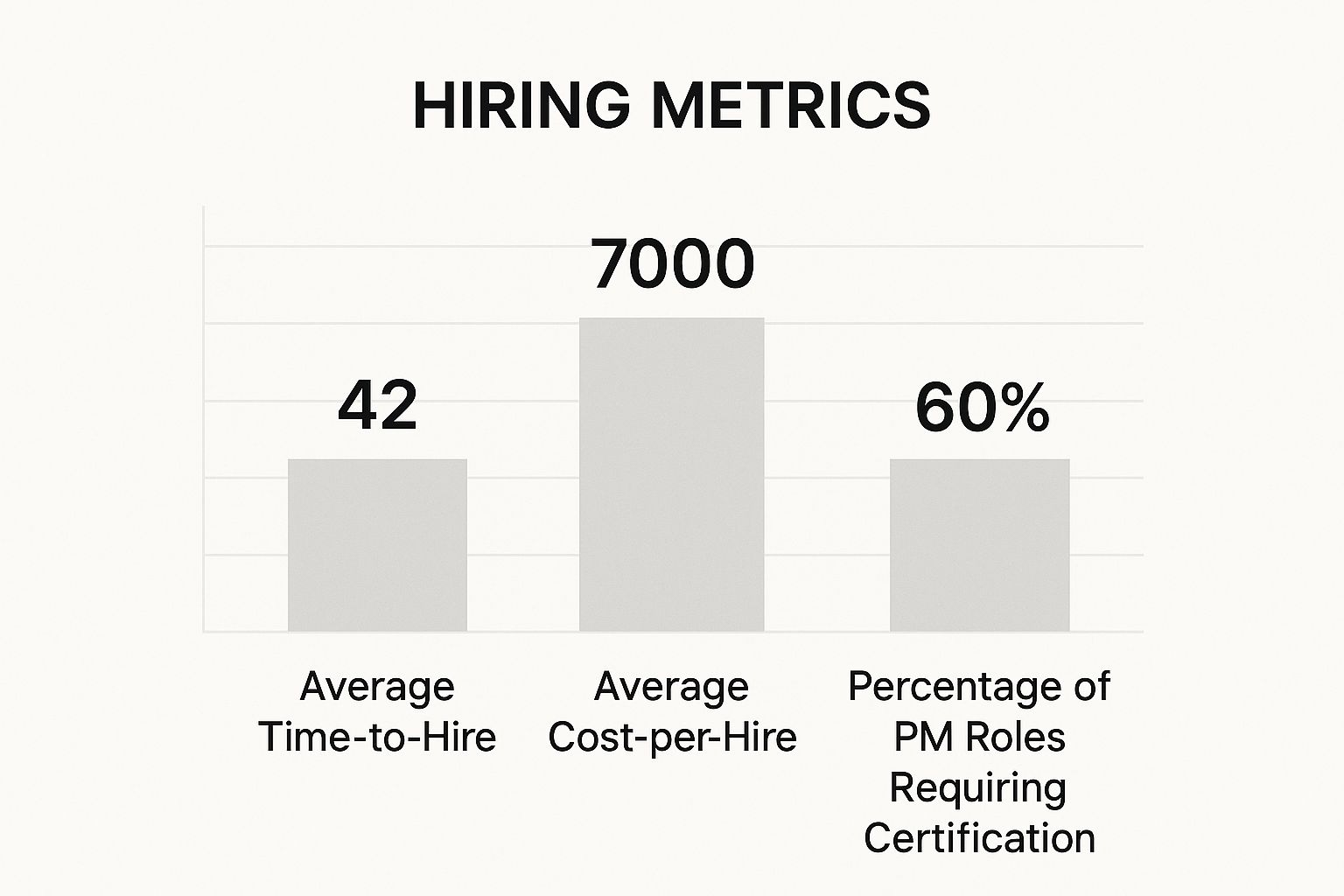
The data tells a clear story: hiring a project manager is a serious investment. As of August 2025, the UK has seen a 42% year-on-year drop in permanent PM vacancies. But don't let that fool you—competition for the best talent is fierce. The median salary has climbed to £60,000, a jump of over 12% from last year.
You can explore more UK project management job market trends to get a fuller picture, which will help you position your offer competitively.
To help you put all this into practice, here's a simple checklist to guide you as you build your ideal candidate profile.
Project Manager Role Profile Checklist
Use this checklist to ensure you've covered all the essential components when defining your ideal project manager.
Component | Key Questions to Answer | Example |
|---|---|---|
Project Methodology | What framework will the PM use? (Agile, Waterfall, Scrum, etc.) | "Primarily Agile (Scrum) for a software development team, with some hybrid elements for reporting to a Waterfall-based PMO." |
Seniority Level | What's the scope of responsibility and autonomy? (Junior, Mid, Senior) | "Mid-level PM to manage a single product feature launch, reporting to the Head of Product. Budget up to £250,000." |
Key Responsibilities | What are the top 3-5 daily or weekly duties? | "Running daily stand-ups, managing the product backlog, reporting on sprint velocity, and handling stakeholder communications." |
Essential Tools | What software or platforms are non-negotiable? | "Must have expert-level proficiency in Jira and Confluence. Experience with monday.com is a plus." |
Strategic Impact | How does this role contribute to business goals? | "This role is critical for launching our new mobile app, which is projected to increase user engagement by 15% in the first year." |
Team & Stakeholders | Who will they work with and manage? | "Will lead a cross-functional team of 6 (2 developers, 1 QA, 1 UX designer, 1 marketing lead) and report to senior leadership." |
Certifications | Are any formal qualifications required or preferred? | "PRINCE2 Practitioner is required; Certified ScrumMaster (CSM) is highly desirable." |
By working through these questions, you create a comprehensive and realistic profile that goes far beyond a generic job description, setting you up for a much more successful search.
Finding Top Project Management Talent
Let’s be honest. The best project managers—the ones who can truly steer a complex project to success—are rarely scrolling through job boards. Why? Because they're usually busy, deeply engaged in challenging roles and delivering real value for their current company. If you want to hire them, you can't just post an ad and hope for the best. You need to switch gears from a passive to a proactive mindset and go find them.
This means actively seeking out this hidden talent where they already work and network.

It’s about building a pipeline of brilliant people before you even have a vacancy. The main tool in your arsenal for this is targeted networking, both online and in person.
Go Where the Talent Is
Professional networks like LinkedIn are an absolute goldmine, but only if you use them correctly. Don't just hit "post job". Use the advanced search to pinpoint people with the exact industry background you need, whether that's in tech, energy, or construction. Look for individuals who hold relevant qualifications like PMP or PRINCE2 and are currently working for companies you respect.
The crucial next step is reaching out with a personalised, compelling message. Generic templates are a complete waste of time and will get you ignored. Your outreach needs to show you’ve actually done your homework.
Mention a specific project or achievement from their profile that genuinely caught your eye.
Explain *why* their specific experience feels like a great match for the challenges your team is facing.
Sell the opportunity, not the job. What makes this role an exciting and logical next step in their career?
The aim here isn't to get an immediate application. It's to start a conversation. You want to build a relationship and plant a seed for a future move. A fantastic PM might not be looking right now, but they will remember a thoughtful, relevant approach when the time is right.
Industry-Specific Sourcing Channels
Every sector has its own talent hubs. For instance, the UK construction industry is a huge employer of project managers. This sector's PM workforce has swelled by around 17% in the last few years, with about 102,100 construction project managers employed as of early 2025. This tells us there's a robust and experienced talent pool to tap into.
Hiring a tech PM, on the other hand, requires a completely different playbook. Try exploring these channels:
Niche Communities: Look for dedicated Slack or Discord groups for product management, Agile methodologies, or even specific tech stacks.
Developer Platforms: Search GitHub and GitLab for people contributing to relevant open-source projects or showcasing their technical abilities.
Webinars and Events: Attend virtual or in-person events focused on your industry. It’s a great way to identify and connect with influential people and rising stars.
Building Relationships With Specialist Recruiters
Partnering with a specialist recruitment agency can give you an instant edge. A good agency has spent years building the very talent networks you're trying to access. They know the market inside out and have already built trust with high-calibre candidates who aren't actively looking. For more tips on this, take a look at our UK guide to hiring project managers.
When you bring an agency on board, treat them like a strategic partner, not just a supplier. Give them the same detailed brief and business context you’d share with an internal manager. The more they understand your culture and your goals, the better they'll be at finding a PM who truly fits.
How to Assess a Project Manager's Real Skills

A polished CV and smooth interview answers are great, but they only prove one thing: the candidate prepared well. When you’re recruiting project managers, you have to dig much deeper to find out what they can actually do. This means having a proper assessment process that shows you how they think, lead, and communicate when things get real.
It’s time to move past the generic questions and design an interview that truly tests their skills in a practical setting.
Design Behavioural Questions That Uncover Truth
Your most powerful tool for this is the behavioural question. Forget hypotheticals like, "How would you handle a difficult stakeholder?". Instead, ask them to tell you about a time they actually did.
This approach forces candidates to pull from genuine experience, making it almost impossible to hide behind a pre-rehearsed script. It’s your window into their real problem-solving style and how they lead when the pressure is on.
Here are a few examples I've found effective:
"Tell me about a time a key project went significantly over budget. What steps did you take to get it back on track?" This gets right to their financial sense and recovery planning.
"Describe a situation where a critical team member was underperforming. How did you handle that conversation and what was the outcome?" This reveals their true leadership and conflict-resolution abilities.
"Walk me through the most complex stakeholder map you've ever had to manage. What made it so tricky, and how did you get everyone aligned?" This tests their strategic communication and influencing skills.
Listen carefully not just to what they did, but why they did it. Their logic tells you everything about their underlying project management philosophy.
A candidate's ability to give specific, detailed examples is a massive green flag. If their answers stay vague or theoretical, be wary. It often means their on-paper experience doesn't quite match their real-world skills.
Put Skills to the Test with a Case Study
Behavioural questions are fantastic, but a practical case study is the ultimate test. I’m not talking about a long, gruelling exam. This should be a short, relevant task that mirrors a real challenge they’d face in the role. The goal is simple: see their skills in action.
For instance, give them a one-page brief. Outline a fictional project that’s running late and suffering from scope creep. Give them 30-45 minutes to prepare a quick presentation on how they’d tackle it.
This single exercise lets you evaluate several crucial skills at once:
Problem-Solving: Do they zero in on the main issues straight away?
Prioritisation: What do they decide to fix first, and what’s their reasoning?
Communication: How clearly can they explain their plan and their logic?
Technical Knowledge: Do they mention specific methodologies or tools that would actually help?
Once they’ve presented, dive in with follow-up questions to challenge their decisions. This kind of hands-on assessment cuts through the talk and shows you who has the grit to lead projects in your specific environment. Ultimately, sharpening your evaluation is a massive part of learning how to improve your recruitment process for the long haul.
Crafting an Offer That No One Can Refuse

You’ve done it. After weeks of searching and interviewing, you’ve found the perfect project manager for your team. But the hard work isn't over yet. Now you have to make them an offer they’ll be excited to accept.
In a market where the best project managers have their pick of roles, a strong offer is more than just a number. It's a statement about how much you value their skills and what they can bring to your business. Get this part right, and you'll not only secure your top candidate but also make them feel like a valued part of the team from day one.
Benchmarking Your Salary Competitively
Let's be honest, salary is the first thing most candidates look at. It's the bedrock of any offer. You need to make sure what you're proposing is competitive, but that doesn't just mean a quick glance at the national average. A project manager role based in London is a different financial proposition to one in Manchester or Aberdeen. You have to consider regional demand and the cost of living.
The wider market context matters, too. While the UK project management sector is huge, employing over 2.13 million people, and 59% of companies are looking to hire, salary growth has been surprisingly sluggish. The average has been stuck around £47,500 since 2020. Once you factor in inflation, that's a real-terms pay cut for many professionals. You can discover more insights about the 2025 employment survey to see just how this is affecting recruitment.
What does this mean for you? It means a genuinely competitive salary can make your offer pop. It’s a chance to really stand out.
Selling the Perks That Truly Matter
While money talks, it’s often the other benefits that seal the deal. This is where you can turn a good offer into a great one. Don't just tick boxes on a list of perks; weave them into a story about what a career with your company looks like.
Your offer isn't just a transaction; it's the first real demonstration of how much you value a candidate's expertise and potential contribution. Frame it as an investment in their future with your company.
Think about what a project manager truly values—things that support their career and give them a better work-life balance. These are the details that show you're invested in them as a person, not just a resource.
Here’s what really moves the needle:
Career Progression: Be specific. Talk about the potential path from this role to a Programme Manager position or even leading a new department. Show them a tangible roadmap for growth.
Professional Development: This is a big one. Offering to pay for sought-after certifications like PMP or PRINCE2 sends a powerful message. It says you're committed to their continuous improvement.
Flexible Working: In this day and age, flexibility is non-negotiable for many. Whether it’s a hybrid model, flexible hours, or compressed work weeks, make it clear what you can offer.
Meaningful Projects: Circle back to the exciting stuff you discussed in the interviews. Remind them of the impact they'll have and the important company goals they’ll be helping to achieve.
My best advice? Make the initial offer over the phone. It’s a personal touch that lets you convey genuine excitement. It also gives you a chance to answer any questions on the spot and reinforce that they are, without a doubt, your first choice.
Onboarding Your New PM for Lasting Success
You’ve found your ideal project manager and they’ve signed on the dotted line. Huge win, right? But the job isn't done yet. The first 90 days are absolutely critical. A chaotic or uninspired start can sour the experience fast, leading to a disengaged new hire who might start looking elsewhere before they've even really begun.
Think of onboarding as the final, crucial piece of the puzzle. It’s your chance to make sure your new PM feels genuinely welcome, understands the lay of the land, and is primed to start making a real impact. This is more than just paperwork and a new laptop; it’s about strategically weaving them into your company’s culture and setting them up for a successful future with you.
The First Week Welcome
Forget throwing them into the deep end with a complex project on day one. Their first week should be all about orientation and connection, not immediate pressure.
A warm, organised welcome speaks volumes. Make sure their desk, computer, and all their software accounts are ready to go before they arrive. Nothing screams "we weren't ready for you" quite like a last-minute scramble to find a password on their first morning.
Take them for a team lunch: A relaxed meal is a great icebreaker, helping them meet the team without the formality of a conference room.
Give them an onboarding buddy: Pair them with a peer who can answer those small, practical questions they might feel awkward asking you. Things like, "Where’s the best coffee?" or "What’s the real deal with the holiday booking system?".
Book some informal intros: Schedule brief, casual chats with the key people they'll be working with. This helps them start mapping out their network and building those vital relationships from the very beginning.
The First 30 Days: Laying the Foundation
Once they’ve settled in, the first month is all about soaking up information. This is their time to understand the why behind the work they’ll be leading. Hand over access to past project documents, team charters, and any strategic roadmaps that will give them context.
The goal here is observation and tackling small, manageable tasks. Maybe they can shadow another PM for a bit or take ownership of a low-risk piece of a larger project. It's a great way for them to get a real feel for your workflows without the stress of being fully accountable just yet.
A great onboarding experience is directly tied to retention. When a new hire feels supported and integrated from the start, they’re far more likely to stick around, feel engaged, and truly invest in your company's success.
The First 90 Days: Building Momentum
By the three-month mark, your new project manager should be transitioning from learning mode to doing mode. They should have a solid handle on the team, the key stakeholders, and your company's unique approach to managing projects.
Now’s the time to hand them their first solo project—something that's a genuine challenge but also achievable. Keep the lines of communication wide open with regular weekly check-ins. These chats are perfect for tracking progress, clearing up any confusion, and offering feedback that builds their confidence and shows you've got their back.
For a more detailed plan, you can easily adapt our comprehensive [onboarding checklist for new employees](https://www.talentpeople.co/post/onboarding-checklist-for-new-employees-7-essential-steps) to fit the specific requirements of a project manager role. Remember, a thoughtful onboarding process isn't just a nice-to-have; it's the final, critical step in securing the great talent you worked so hard to find.
Got Questions About Hiring a Project Manager?
Even with the best-laid plans, a few questions always pop up during the hiring process. Let's tackle some of the most common ones I hear from companies trying to find the right project manager. This should help you navigate the process with a bit more clarity.
How Long Does It Realistically Take to Hire a PM?
The honest answer? It really depends on how senior or specialised the role is. As a general rule of thumb, you should probably budget for 4 to 8 weeks from the day you post the job advert to making an offer.
You might fill a junior role on the quicker end of that scale. But if you’re hunting for a senior leader with a very specific skill set, be prepared for it to take longer. You're dealing with a much smaller pool of talent, and the best candidates are often happily employed elsewhere, so you'll need time to find and engage them.
Should I Make a PMP or PRINCE2 Certification a Deal-Breaker?
This is a classic question, and the answer comes down to what you actually need. Certifications like PMP or PRINCE2 are great because they show someone has formally studied project management methodologies and is serious about their craft. If you're a large, structured organisation, a certification might genuinely be a non-negotiable requirement.
However, don't fall into the trap of thinking it's the only thing that matters. For a nimble startup running its own unique flavour of agile, a candidate's hands-on experience and proven ability to adapt could be infinitely more valuable than a certificate. Never automatically bin a CV from someone with an incredible track record just because they haven't sat a specific exam.
One of the biggest mistakes I see is focusing too much on certifications and not enough on actual, real-world results. Before you start, decide if a certification is a 'must-have' or a 'nice-to-have' for this specific role.
What’s More Important: Soft Skills or Technical Chops?
Ah, the age-old debate. The truth is, it's not an either/or situation. You absolutely need both. A project manager can be a walking encyclopaedia of project methodologies, but if they can't talk to a stakeholder, motivate their team, or navigate a difficult conversation, the project is destined to fail.
Here’s a simple way to think about it:
Technical Skills: This is the what. It's their knowledge of Agile or Waterfall, how they manage a budget, and their proficiency with scheduling tools. This is the bedrock.
Soft Skills: This is the how. It’s their leadership, their communication style, their knack for solving problems, and their ability to influence people. This is what actually builds the project on that bedrock and gets it over the line.
A truly effective interview process will dig into both sides of the coin. You need someone who can not only plan the work but also, crucially, lead the people.
Finding the right project manager is a serious investment, one that can make or break your most important work. At Talent People, our entire focus is on connecting ambitious companies with the project expertise they need to succeed. Whether you're building out a team in the energy sector or need a technical leader for a complex digital project, we have the project-based hiring solutions to find your perfect match.

Comments