Building High Performing Teams: Proven Strategies for Success
- Talent People

- Aug 21, 2025
- 14 min read
Great teams don't just happen by accident. They're built intentionally, piece by piece, by creating an environment where talented people feel aligned to a shared purpose. It’s about getting that powerful mix of clear goals, mutual trust, and open communication just right, so the team can achieve far more together than they ever could apart.
The Blueprint for a Modern High Performing Team
So, what does a truly high-performing team look like today? It's not just about hitting targets. It's about nurturing a specific kind of culture. Think of it as a blueprint – a set of non-negotiable pillars that create a resilient, motivated, and highly effective unit.
These are the absolute essentials:
Psychological Safety: This is the bedrock. It’s creating a space where people feel safe enough to speak up, ask a "silly" question, admit a mistake, or float a wild idea without worrying about being shut down or blamed.
Crystal-Clear Goals: Everyone needs to know where the ship is heading. It’s not just about what they need to do, but why it matters and how their specific contribution fits into the bigger picture.
A Culture of Open Feedback: Feedback shouldn't be a scary, once-a-year event. In great teams, it's a constant, constructive dialogue where criticism is seen as a gift that helps everyone grow.
The Impact of Clear Objectives
The difference between a team that has a clear destination and one that’s just drifting is night and day. When everyone is aligned and knows exactly what they're aiming for, their efforts become laser-focused, and the results speak for themselves.
This chart really drives the point home, showing the performance gap between teams with and without that clarity.
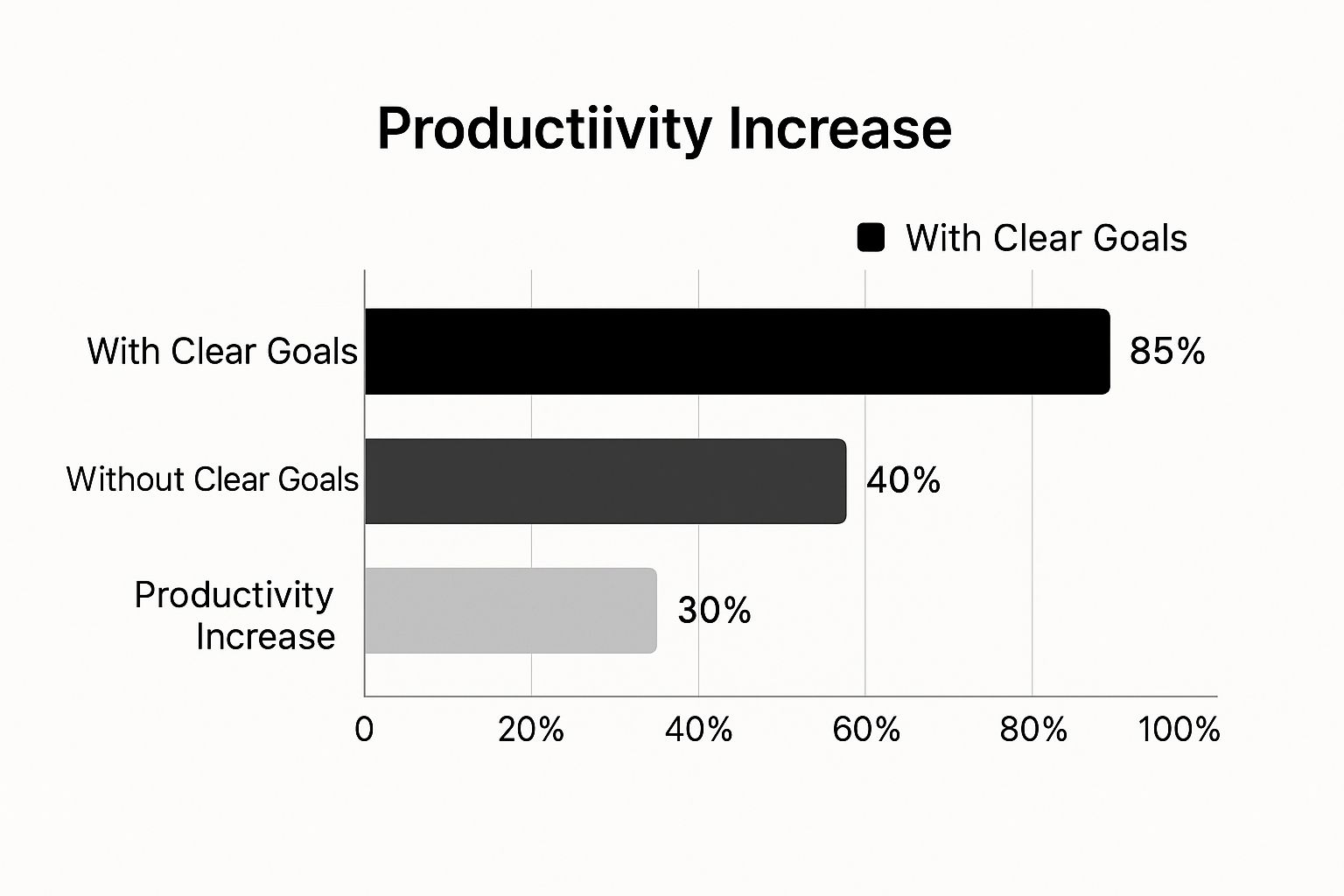
As you can see, simply establishing clear goals can more than double a team's chances of reaching high-performance status. It’s a game-changer.
Core Pillars of High Performing Teams
To give you a quick reference, here’s a breakdown of those foundational pillars. Think of this table as a checklist for building a team that can thrive in any environment.
Pillar | Why It Matters | Key Action for Leaders |
|---|---|---|
Psychological Safety | Creates a foundation of trust where innovation and honesty can flourish. People won't contribute their best ideas if they fear ridicule or punishment. | Model vulnerability. Admit your own mistakes openly and thank team members for taking risks, regardless of the outcome. |
Shared Vision & Goals | Aligns individual efforts towards a common purpose, giving work meaning and direction. It’s the "why" behind the "what." | Co-create goals with your team. Ensure everyone understands how their daily tasks contribute to the overarching company mission. |
Open & Honest Communication | Prevents misunderstandings, speeds up problem-solving, and builds stronger relationships. It's the lifeblood of effective collaboration. | Establish clear communication channels and norms. Actively solicit feedback and create regular, structured opportunities for dialogue. |
Mutual Trust & Respect | Allows team members to rely on each other, delegate effectively, and engage in healthy conflict without damaging relationships. | Be consistent, reliable, and fair in your actions. Empower team members with autonomy and show you trust their judgement. |
Defined Roles & Responsibilities | Eliminates confusion and turf wars, ensuring accountability. Everyone knows what they are responsible for and who to turn to for help. | Work with the team to map out clear roles. Revisit and adjust these roles as projects and priorities evolve. |
Ultimately, these pillars are interconnected. Strength in one area often reinforces another, creating a virtuous cycle of performance and engagement.
Reshaping Team Dynamics for a Hybrid World
The shift to hybrid and remote work has completely changed the game. Here in the UK, it has exposed a fascinating performance gap. Recent research found that an impressive 66% of remote teams now identify as high-performing, while only 47% of on-site teams say the same.
This really highlights how modern, agile work setups are starting to outperform traditional, office-centric models. If you're keen to dig deeper, you can explore the full research on high-performing teams.
A high-performing team isn't just a group of experts; it's a group of experts who trust each other. This trust is built through shared purpose, transparent communication, and consistent, supportive leadership.
At the end of the day, building a top-tier team is an active, ongoing process. It’s about moving beyond simply hiring smart people and instead, deliberately engineering a culture where collaboration, trust, and excellence can truly thrive—no matter where your team logs in from.
Recruiting for Performance and Potential

You can't build a high-performing team after the fact; the foundation is laid the moment you start recruiting. It all begins with the people you invite to join. So many organisations fall into the trap of focusing on polished CVs and technical skills, completely missing the traits that actually fuel outstanding performance.
To assemble a team that truly excels, you have to look past what a candidate has already done and focus on what they can do. This means shifting your interview process to test for things like resilience, genuine collaboration, and a growth mindset, not just ticking off qualifications from a list.
Designing Interviews That Reveal True Potential
Let's be honest, traditional interview questions are magnets for canned, rehearsed answers. If you want to see what someone is really made of, you need to use behavioural and situational questions that show you how they think and act when the pressure is on.
Here are a few ways I’ve found to get deeper insights:
Real-World Problem Solving: Give them a genuine, but anonymised, problem your team wrestled with recently. Ask them to talk you through how they would tackle it. This isn't about getting the 'right' answer; it's about seeing their critical thinking skills in action.
A Taste of Teamwork: Pair the candidate with a current team member for a short, collaborative exercise. Watch how they interact. Do they listen? Do they build on ideas or just push their own? This gives you a priceless glimpse into how they'd actually work with your people.
The Failure Question: Ask about a time they failed at work. The failure itself is irrelevant. What you’re looking for is how they frame it. Do they take ownership, reflect on what happened, and show you what they learned? That's the gold.
The real aim isn't to hire someone who already has all the answers. It's to find someone who knows how to find the answers. Look for curiosity and coachability—those are the tell-tale signs of a future star performer.
Don't forget your job descriptions. They're more than just a list of duties; they're your first sales pitch. Tell a compelling story about your team's culture, its mission, and the unique challenges you're tackling. This helps attract people who are not just skilled, but who will genuinely click with your values. For some more ideas on attracting top talent, have a look at our other recruitment articles.
Navigating the Current UK Talent Market
Getting the right people on board is more critical than ever, especially given the current economic climate. In the UK, the employment rate for people aged 16 to 64 stood at 75.2% from March to May, yet the number of job vacancies has been steadily falling.
This tightening market means existing teams are often stretched thin, making the impact of every new hire—good or bad—feel that much bigger. It’s a landscape that rewards smart, potential-focused recruitment.
Ultimately, recruiting for a top-tier team is a balancing act between current skills and future potential. When you fine-tune your process to really identify resilience, a collaborative spirit, and a solid cultural fit, you’re not just filling a role. You’re laying the groundwork for long-term success.
Nurturing a Culture of Trust and Engagement
Once you’ve got the right people on board, the environment you build for them is everything. Assembling a high-performing team isn't just about collecting a group of individual superstars; it's about creating a culture where they can truly shine together. This all starts with a bedrock of genuine trust and deep engagement.
This isn't some fluffy, "nice-to-have" idea. Trust is the very currency of collaboration. When your team members trust you and each other, they feel safe enough to take risks, challenge the status quo, and own up to mistakes without pointing fingers. This is the heart of psychological safety, and it’s the soil where real innovation grows.
What Real Engagement Looks Like
Engagement isn't about free lunches or fancy office perks. It’s about forging a real connection between an employee's day-to-day work and the team's wider mission. It means making sure every single person feels seen, heard, and valued for what they bring to the table.
I once saw a project manager notice one of her junior engineers was always quiet in meetings but produced brilliant, detailed documentation. Instead of forcing them to speak up, she started asking them to prepare a short summary before each meeting to guide the discussion. This simple shift played to their strengths, boosted their confidence, and the entire team benefited from their clarity.
The most powerful thing a leader can do is model vulnerability. When you openly admit you don't have all the answers or share a mistake you've made, you give your team permission to be human. This simple act builds trust faster than any team-building exercise.
The Bottom-Line Benefits of a Strong Culture
Putting time and effort into building a culture of trust and engagement pays real dividends. Highly engaged teams in the UK have been shown to deliver 21% greater profitability than their less-engaged peers.
On top of that, companies with strong employee engagement see a 59% lower turnover rate—a massive advantage when you consider the steep cost of replacing good people. Engaged employees are also 41% less likely to be absent, which translates directly into better, more consistent productivity. You can explore the data behind employee engagement in the UK to see the full financial picture.
It's clear: creating a supportive environment isn't just good management; it's a strategic business decision.
Practical Ways to Start Building Trust
So, how do you actually do it? Building trust isn’t a one-off task; it requires consistent, deliberate action. Think of it as a marathon, not a sprint, where every single interaction either builds trust or chips away at it.
Champion Honest Communication: Create genuine channels for feedback to flow up, down, and sideways. Don’t just ask for opinions—act on them. When people see their input leads to real change, they feel their voice matters.
Encourage Healthy Debate: A silent team isn't necessarily an aligned one; it's often a fearful one. Actively invite different viewpoints and frame disagreements as a vital part of finding the best solution, not as a conflict.
Lead with Empathy: Make a real effort to understand your team's challenges, both at work and outside it. When people feel their leader genuinely cares about them as individuals, their loyalty and commitment naturally follow.
At the end of the day, a culture of trust and engagement is your team's ultimate competitive advantage. It's the fuel that keeps them going through tough projects and inspires them to deliver work they can be proud of. For businesses aiming to create these kinds of teams, understanding your unique challenges is the starting point. You can delve into how our specialist recruitment expertise helps companies find the very leaders who know how to build these exceptional environments.
Setting Goals That Drive Real Results
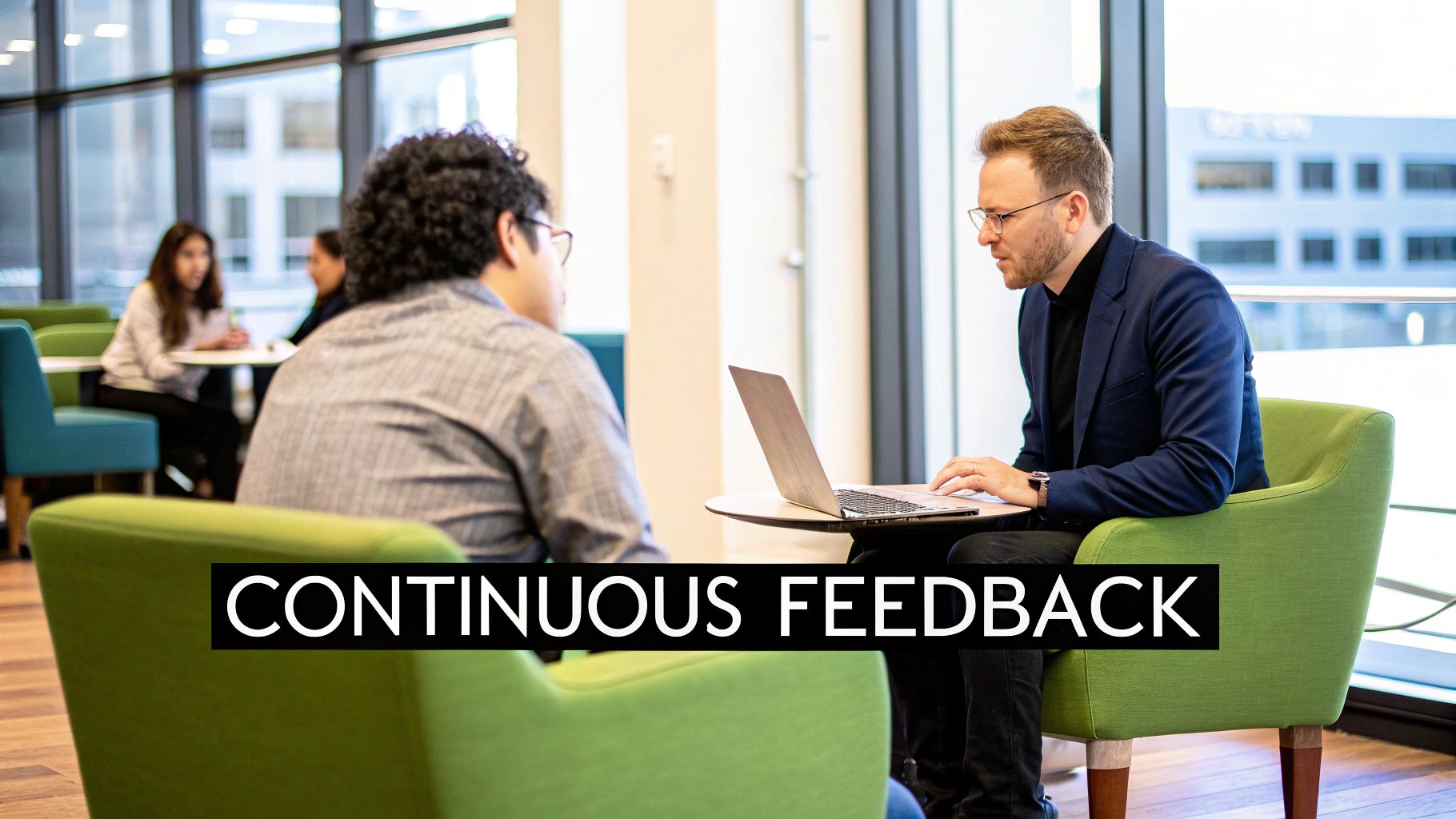
Ever seen a team full of talented people working incredibly hard but getting nowhere? It’s a common story. Often, the problem isn’t a lack of effort but a lack of direction. A team without clear, compelling goals is like a ship without a rudder – plenty of activity, but no real progress.
The secret to unlocking a team's potential isn't just about setting goals; it's about setting the right ones. I'm talking about goals that weave individual tasks into a larger, shared mission.
This connection is what sparks genuine motivation. When people see exactly how their day-to-day work pushes the company forward, their tasks gain meaning. They stop just ticking boxes and start building something they believe in.
Moving Beyond SMART Goals
We've all been taught the SMART framework (Specific, Measurable, Achievable, Relevant, Time-bound). It's a solid foundation, for sure. But on its own, it can feel a bit... clinical. It often misses the one ingredient that top teams thrive on: inspiration.
High-performers aren't just motivated by achievable targets; they're fired up by ambitious goals that push them to grow and think in new ways.
This is where frameworks like OKRs (Objectives and Key Results) really shine. They brilliantly separate the ambitious "what" from the measurable "how."
Objective: This is your big-picture, qualitative aim. It should be memorable and inspiring. Think something like, "Become the go-to technical partner in the North Sea renewables sector."
Key Results: These are the concrete, quantitative metrics that prove you're getting there. For instance: "Secure three new offshore wind projects," or "Achieve a 95% client satisfaction score."
This structure rallies everyone around a powerful vision while giving them clear benchmarks to aim for. It forces a shift in mindset from simply being busy to creating a real, measurable impact.
The real power of a great goal is its ability to create clarity and alignment. When everyone is rowing in the same direction, the team can move faster and more efficiently than you ever thought possible, even through challenging waters.
Choosing the right goal-setting framework can feel daunting, but it really depends on your team's culture and the nature of your work.
Goal Setting Frameworks Compared
Framework | Best For | Key Benefit |
|---|---|---|
OKRs | Ambitious, growth-focused teams that need alignment across departments. | Connects ambitious vision with measurable outcomes, promoting agility. |
SMART Goals | Individual performance management and projects with clear, defined outcomes. | Provides clarity and focus for specific, straightforward tasks. |
BHAGs | Establishing a long-term, inspiring vision for the entire organisation. | Creates a powerful, unifying North Star that drives motivation for years. |
Ultimately, the best framework is the one your team will actually use. Don't be afraid to experiment and adapt one to fit your unique needs.
Fostering a Culture of Ownership
Look, setting the goals is only half the job. Getting them to stick requires a culture of accountability. And I don't mean micromanagement or a culture of blame. True accountability is about building a powerful sense of collective ownership, where people feel responsible for their commitments to each other.
One of the best ways I’ve found to do this is to make goals public within the team. When everyone’s objectives are out in the open, it naturally encourages peer support and collaboration. It also makes it much easier to spot when someone is struggling and offer help before a project derails.
Regular, informal check-ins are also non-negotiable. These aren't stuffy status reports. They're quick, focused chats about progress, roadblocks, and what we can do to help each other succeed. This simple habit builds a supportive environment where accountability feels like a shared commitment, not a top-down order.
Leading Through Coaching and Development

The days of the top-down manager are over. In today’s fast-moving, complex markets, the best leaders have made a critical shift: they’ve stopped being directors and have become coaches. This isn't just a change in title; it's a fundamental change in approach that's essential for building a truly high-performing team.
The focus moves from simply managing tasks to genuinely nurturing talent. It's about seeing the unique strengths in each person, understanding their career goals, and figuring out how to weave those individual ambitions into the team's wider objectives.
The Art of the Coaching Conversation
Great coaching rarely happens in a formal, scheduled session. It’s woven into the small, everyday interactions you have with your team, especially one-on-ones. These meetings need to be less about status reports and more about personal and professional development.
The real trick is to stop supplying all the answers. Instead, you need to start asking powerful, open-ended questions.
For instance, rather than saying, "You should do X," try asking, "What options have you already considered for this?" This subtle shift forces critical thinking and gives your team members the space to build their own problem-solving muscles.
Here are a few questions I’ve found incredibly effective:
"What's one thing you'd like to get better at this quarter?"
"Which part of your job is giving you the most energy right now?"
"If there were zero constraints, what would your ideal solution look like?"
Questions like these open up a conversation about growth, not just deadlines. They send a clear signal that you're invested in the person behind the role.
Giving Feedback That Fuels Growth
Feedback is the fuel for development, but it's so often delivered badly. Your goal should be to offer insights that feel helpful and supportive, not just critical. Always frame your feedback around specific, observable actions and their impact, rather than making sweeping statements about someone’s personality.
For example, instead of, "You were too quiet in that meeting," you could say, "I noticed you had some brilliant points in your notes but didn't get a chance to share them. The team would really benefit from hearing your take on these issues." It's specific, it's actionable, and it’s encouraging.
A leader's role as a coach is to hold up a mirror, not a magnifying glass. The goal is to help team members see their own potential and blind spots more clearly, empowering them to take ownership of their own development path.
Adopting this style of leadership completely changes the team dynamic. It creates a genuine learning culture where everyone feels responsible for continuous improvement. When people feel that their growth is a priority, their engagement skyrockets, they become more resilient, and they're far better equipped to handle whatever challenges come next.
Finding leaders with these innate coaching skills is a massive part of our recruitment philosophy. You can see exactly how we identify this kind of talent by exploring the Talent People recruitment process. It’s how we ensure we’re not just finding skilled people, but true team builders who can lift everyone around them.
Common Questions I Get About Building Great Teams
Even with the best game plan, the reality of building a top-tier team is that you'll always hit a few snags. Over the years, I’ve seen leaders bump up against the same practical challenges again and again. Let's tackle some of the most common questions I hear, with some straight-talking advice for what actually works.
How Do You Turn Around an Underperforming Team?
Turning a struggling team around isn't about finding a magic bullet; it's more like being a detective. Your first job is to figure out what's really going on beneath the surface. Are goals fuzzy? Is there tension that no one is talking about? Or are people simply in the wrong roles?
I always start with confidential one-to-one chats. The goal isn't to point fingers but to get an honest read on the situation from everyone's perspective. You'd be amazed what people will tell you when they feel safe.
Once you have a better idea of the root causes, the absolute priority is to rebuild psychological safety. People need to feel they can speak up, flag problems, and be honest without getting shot down.
Then, you hit the reset button on expectations. But you don't do it alone. You work with the team to set new goals that are crystal clear and genuinely achievable. Getting them involved in this process is non-negotiable—it creates a sense of shared ownership that might have been missing.
From there, look for a few quick, easy wins to get some positive momentum going. Morale is often fragile in these situations. Finally, provide targeted coaching where there are skill gaps and make consistent, constructive feedback part of your regular rhythm. It’s a patient process of rebuilding trust, clarity, and confidence, one step at a time.
What's the Single Most Important Factor for a High-Performing Team?
If I had to pick just one thing, it's psychological safety. All the research, especially Google's famous Project Aristotle, points to this as the absolute bedrock of any truly great team.
Psychological safety is the shared belief that it’s safe to be vulnerable, to take interpersonal risks. It means people can ask what they think is a 'stupid' question, admit they’ve messed up, or challenge an idea without fear of being embarrassed or punished.
Without that foundation of trust, you get nothing. Creativity dries up. People won't flag potential disasters because they're afraid of looking stupid. All the other important stuff—clear goals, accountability, brilliant people—just doesn't work as well if the team doesn't feel safe with each other.
How Do You Keep a Team Firing on All Cylinders When They're Remote or Hybrid?
Keeping a distributed team at the top of its game is all about being deliberate. You can't just rely on the casual chats and osmotic communication that happens when you're all in the same building.
Here’s what I’ve found makes the biggest difference:
Be a deliberate communicator: You have to consciously share information, context, and updates. Use multiple channels and never assume everyone is on the same page just because you sent one email.
Focus on results, not presence: Trust your team to get the job done. The metric for success should always be the quality of their work and the outcomes they achieve, not whether their light is green on Slack.
Manufacture the water cooler: You have to actively create opportunities for connection. Schedule regular, informal virtual catch-ups with no agenda. Have dedicated chat channels for pets, hobbies, and random banter. Make sure your one-to-ones are sacred.
Embrace asynchronous work: Tools like shared documents and project management platforms are your best friends. They allow everyone to stay in sync and contribute, no matter their time zone or personal schedule. It’s about creating alignment without demanding constant real-time presence.
At Talent People, our bread and butter is helping ambitious companies build the leadership and technical teams that can win in tough markets. If you're looking for a partner to cut through the noise and help you hire for real-world performance, discover our project-based recruitment solutions.

Comments