Hiring C-Suite Talent With Executive Search Consultants
- Talent People

- Aug 31, 2025
- 12 min read
Picture this: you're trying to build a world-class football team and your star manager has just left. You wouldn't just stick a "Help Wanted" ad on the internet, would you? Of course not. You'd bring in a specialist scout—someone with deep connections and an eye for talent—to find the absolute best person for that crucial job.
That's exactly what executive search consultants do in the business world. They are the strategic talent scouts for the most important leadership roles in a company.
What Executive Search Consultants Actually Do

Think of executive search consultants as specialist advisors. Companies hire them to find, attract, and ultimately secure top-tier leaders. Unlike general recruiters who might fill dozens of different roles, these consultants focus exclusively on the big, confidential appointments: C-suite executives, board members, and vice presidents.
They’re not just order-takers; they’re strategic partners. Their work often starts long before a job description even exists, helping a company define what kind of leader it truly needs to hit its goals. This deep, advisory relationship is what really sets them apart.
The Headhunting Approach Explained
The main technique these consultants use is often called 'headhunting'. This isn’t about posting a job online and waiting for CVs to roll in. It's a proactive, and very discreet, process of finding exceptional leaders who are not actively looking for a new role. They target the high-performers who are happy and successful right where they are.
This proactive search breaks down into a few key steps:
Deep Market Mapping: They methodically chart out the talent landscape, identifying every potential candidate within a specific industry or function.
Confidential Outreach: They tap into their extensive networks and use their industry knowledge to approach these potential candidates without making a fuss.
Strategic Engagement: The real art is presenting an opportunity that truly resonates with a candidate's personal and professional ambitions, often persuading them to consider a move they hadn't even thought about.
This careful, targeted process gives clients a shot at hiring talent that would otherwise be completely off the market.
An executive search is less about filling a vacancy and more about making a strategic investment. The right consultant provides the market intelligence, candidate access, and impartial advice needed to secure leadership that defines a company's future.
Beyond Simple Recruitment
At the end of the day, an executive search consultant's job is about much more than just finding people. They deliver priceless market intelligence, like how competitors are structured. They offer hard data to help shape competitive salary packages and conduct exhaustive vetting to reduce the risk of a bad hire.
They guide the entire journey, from those first quiet conversations right through to tricky offer negotiations and even help with onboarding. It's all about ensuring the new leader is a successful, long-term fit. This makes them indispensable partners in building the leadership teams that will shape the successful companies of tomorrow.
Why Top Companies Partner With Search Firms
Bringing an executive search consultant on board isn't just about filling a vacancy; it’s a serious strategic move. The biggest advantage? It opens the door to the 'hidden' talent market. We're talking about the high-flying leaders who aren't scrolling through job boards but are open to a compelling conversation when a trusted expert calls.
This kind of access gives you a real competitive edge. These consultants do more than just find people. They bring back invaluable market and competitor intelligence, helping you benchmark everything from your leadership team's structure to your compensation packages against the best in the business. Suddenly, a new hire becomes a strategic upgrade for the whole company.
Maintaining Confidentiality and Objectivity
Discretion is paramount, especially at the senior level. Imagine needing to replace an underperforming executive or plan a confidential succession. Running that search internally can cause a whirlwind of rumour and uncertainty. An executive search firm handles everything with complete privacy, safeguarding morale and stopping market chatter in its tracks.
They also bring a much-needed dose of objectivity. Let's be honest, internal hiring can sometimes get tangled up in office politics or unconscious bias. A good search firm cuts through all that, making sure every candidate is assessed using the same tough, impartial criteria.
An impartial, data-driven evaluation process is essential for long-term success. By removing internal bias, companies are far more likely to select leaders based purely on merit, capability, and cultural fit, leading to hires that drive measurable growth.
A Strategic Investment in Growth
At the end of the day, hiring a search firm is an investment in your company’s future. Leadership roles are more complex than ever, which is why this specialised field has seen such significant growth. The UK executive search industry, for instance, has grown into a market with revenues estimated at £1.8 billion, a figure you can explore further over at IBISWorld.com.
This growth speaks volumes about how much top companies value getting leadership appointments right. The process is about so much more than just putting someone in a chair. You can get a full breakdown in our guide to what executive recruitment truly involves.
These partnerships ensure every key leadership hire is made with the precision and market insight needed to land game-changing talent. It's not about filling a seat; it's about building a leadership team that can steer the company through whatever comes next.
The Executive Search Process From Start to Finish
When you bring in an executive search consultant, you’re not just getting a list of CVs. You’re kicking off a detailed, multi-stage partnership designed to find the one person who can genuinely steer your company forward. Think of it less as a sprint and more as a methodical expedition to find the right leader for a crucial role.
It all begins with a deep dive. The consultant will sit down with your leadership team to get under the skin of your business. The goal isn’t just to fill a job description; it’s to understand the specific challenges and opportunities the new executive will face. From these conversations, a crystal-clear candidate profile emerges, detailing the experience, leadership style, and cultural fit needed for them to thrive.
Mapping the Market and Engaging Talent
With a solid brief in hand, the real hunt begins. The search firm starts by meticulously mapping the market. Using their own databases, industry intel, and, most importantly, their personal networks, they identify every single potential candidate who fits the bill. Crucially, this includes high-flyers who aren't even looking for a new job.
Next comes the delicate art of confidential outreach. This is where a great consultant earns their fee, especially when approaching passive candidates—those top performers who are happy and successful where they are. The skill is in framing the opportunity in a way that sparks curiosity and persuades them to have an initial, exploratory chat.
This infographic lays out the core stages of a typical search, from understanding your needs to placing the ideal candidate.
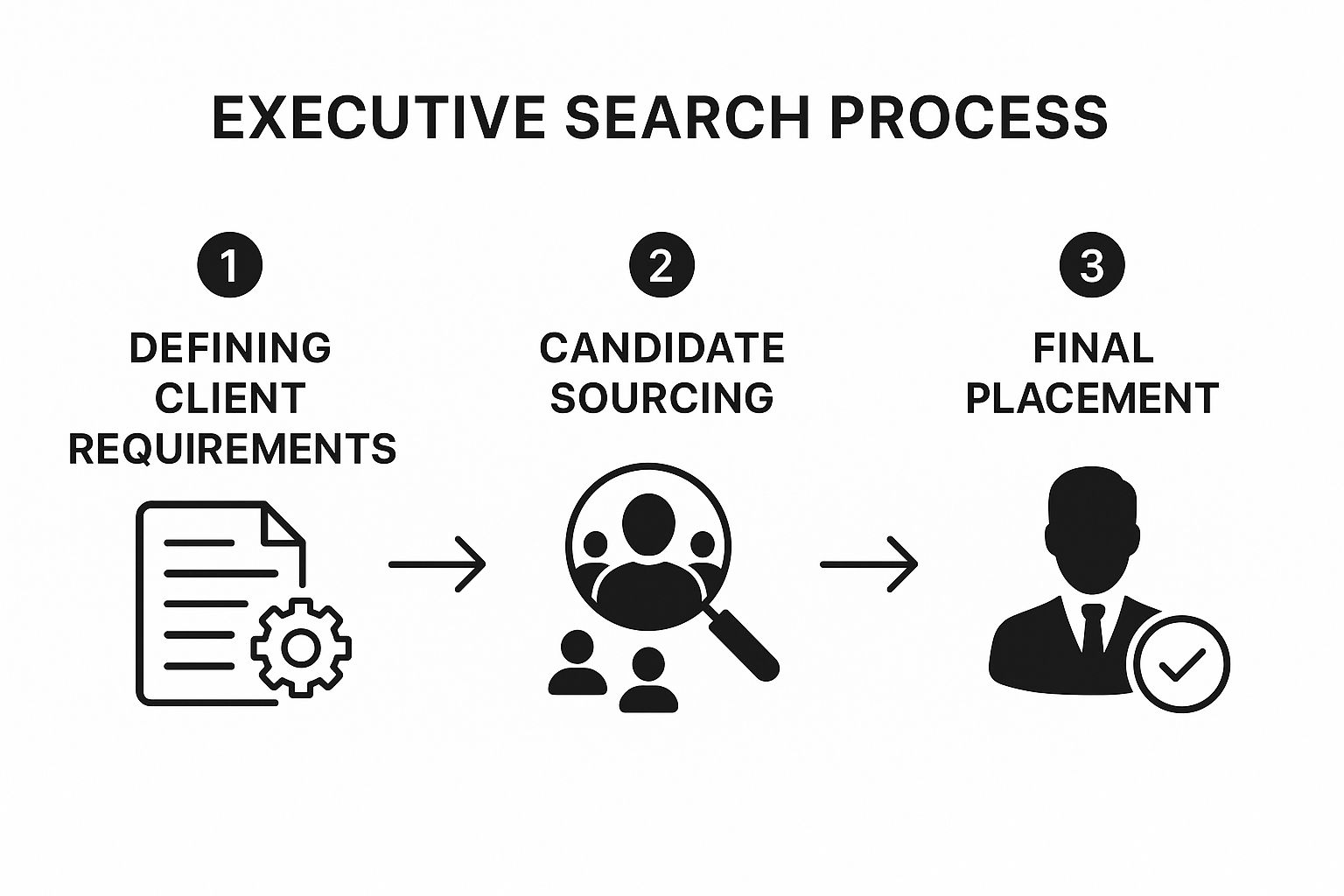
As you can see, each step logically follows the last, creating a funnel that filters down the talent pool to only the most suitable leaders.
Assessment, Negotiation, and Onboarding
Once a group of interested candidates has been identified, the process shifts to a tough, multi-layered assessment. This is a world away from a standard job interview. We’re talking about in-depth competency-based questioning, psychometric tests, and detailed explorations of past successes and leadership philosophies. The aim is to build a complete picture of each person.
After this intensive vetting, the consultant presents a curated shortlist of the absolute best candidates. You’ll receive detailed reports on each one, highlighting their strengths, potential red flags, and exactly how they stack up against the original brief. This allows your team to focus its energy on a final round of interviews with a handful of exceptional individuals.
The real value of a structured process is the confidence it gives you. By the time you make an offer, that candidate has been scrutinised from every angle. This drastically cuts the risk of a bad hire and sets the stage for long-term success.
Finally, the consultant expertly handles the complex offer negotiations, acting as a vital go-between to get the deal over the line. But their work isn't done. They’ll conduct thorough, off-the-record reference checks to verify everything. Many top firms will even support the new leader’s onboarding to ensure they hit the ground running from day one. To see this in even more detail, you can master the executive recruitment process with our in-depth guide.
How Consultants Uncover Elite Leadership Talent

Top executive search consultants operate in a world far removed from standard job boards and online applications. Think of them as talent detectives. They piece together clues from across an industry to find and connect with exceptional leaders who aren't even looking for a new job. Their approach is a real blend of art and science, mixing deep human insight with sharp data analysis.
It’s like they're building a detailed map of an entire industry. They don't just list names; they chart career paths, pinpoint major achievements, and grasp the complex networks that link top performers. This isn't guesswork. It's a meticulous process built on sophisticated tools and good old-fashioned relationship building.
Combining Technology With Human Insight
A modern search often kicks off with technology, but human expertise always steers the ship. Consultants use powerful databases and AI-driven tools for the initial market sweep, which helps them identify a broad pool of potential candidates much faster than doing it all by hand. This tech ensures every possible avenue is explored right from the start.
But the real work begins where the algorithms end. The consultant’s job is to look at that data and, using their deep industry knowledge, spot the subtle signs of a truly brilliant leader. They take a long list of possibilities and refine it into a curated shortlist of genuinely viable candidates through a process that’s all about human judgement.
This mix of tech and intuition is what makes the search both exhaustive and incredibly precise.
The true value of a top-tier executive search consultant lies in their ability to access the inaccessible. They connect companies with transformative leaders who would otherwise remain completely off the radar, hidden within successful roles at competitor organisations.
The Power of Networks and Referrals
While databases and research are crucial, a consultant's most powerful asset is their network. These aren't just names in a contact list or LinkedIn connections; they're deep, trusted relationships built over many years. This insider access lets them make discreet enquiries and gather honest, off-the-record feedback about potential candidates.
This network-driven approach is remarkably effective. In fact, personal connections are still king, with around 70% of executive hires coming from referrals. This really underscores just how vital relationship-building is when it comes to securing the best people. The UK's top firms, which consistently place successful candidates and maintain over 90% candidate retention rates, prove the immense value of a meticulous, network-based search. You can read more about the challenges of sourcing executive talent in the UK to understand the complexities involved.
Ultimately, it’s this combination of discreet networking, rigorous research, and deep personal connections that allows executive search consultants to find and deliver game-changing leaders that no one else can.
Choosing the Right Executive Search Partner

Picking an executive search consultant isn't like buying a service off a shelf. It’s much closer to choosing a strategic business partner, someone you'll trust with one of your most critical decisions. The success of a top-level hire often rests entirely on getting this choice right.
That's why you need to look past the slick website and big brand names. What really counts is the expertise of the individual consultant who'll be running your search.
Think of it this way: you’re not hiring the firm’s logo; you're hiring a person. Their direct experience, industry knowledge, and personal network are what will make the difference between a good hire and a great one. A firm can have offices all over the world, but it's the specific consultant on your account who will make or break the search.
Key Questions to Ask Potential Partners
To get a real sense of a potential partner, you need to ask the right questions. This isn't just a box-ticking exercise; it’s your best chance to see how they think, work, and whether they truly have what it takes to find your next leader.
Be ready to dig into their process with a few pointed questions:
Industry Expertise: Can you walk me through a few recent searches you’ve personally completed in our sector? You’re listening for genuine insight into your market’s challenges and opportunities, not just buzzwords.
Research Methodology: How do you find people who aren't on LinkedIn? A top-tier consultant will talk about their research process, how they map the market, and how they tap into their network to find hidden talent.
Candidate Assessment: Beyond a CV, how do you evaluate if someone is a good fit? Look for structured, competency-based interviews and perhaps psychometric tools that assess skills and cultural alignment.
Diversity and Inclusion: How do you ensure you present a diverse pool of candidates? Ask for concrete examples of how they've achieved this on past searches, not just a vague commitment.
A partnership with an executive search firm is built on trust and alignment. You need to feel confident that the consultant not only understands the role on paper but also genuinely gets the culture and vision of your organisation.
Understanding Cultural Fit and Communication
This is going to be an intense, close-working relationship, so you have to click. You need a consultant you can be frank with, and who keeps you in the loop with open and regular updates.
Set the ground rules for communication early on. Will you get a weekly progress report? How will they share feedback from the market, both good and bad? This relationship is fundamental to success. For a closer look at what separates the good from the great, check out our guide on hiring a modern executive search consultant.
Clarifying the Fee Structure
Finally, you need to be crystal clear on the financials. While there are a few ways these things are structured, the industry standard for senior roles is the retained search model.
This is different from a contingency recruiter who only gets paid if they make a placement. With a retained firm, you pay a fee (usually in thirds or stages) to secure their dedicated time and resources for your search.
This retainer model is a sign of deep commitment. It means the firm is all-in, ready to conduct exhaustive research and stick with the project until it's done, no matter how tough it gets. It aligns their success directly with yours, making them a true partner in the search.
Answering Your Key Questions About Executive Search
Thinking about bringing in an executive search firm is a big decision, and it’s natural to have questions about what’s involved. You’re likely wondering about the cost, how long it will all take, and what you’ll need to do. Getting straight answers to these practical points is the foundation of a great partnership, making sure everyone is on the same page from day one.
Let's walk through some of the most common questions leaders ask before they start a retained search.
How Much Does an Executive Search Cost?
This is usually the first question on everyone's mind. The short answer is: it depends. The industry standard for a retained executive search is a fee based on a percentage of the successful candidate's total first-year cash compensation.
Typically, this fee sits somewhere between 30% and 35%. For particularly complex or high-stakes C-suite roles, you might find that the top-tier global firms charge a bit more. The payment is usually structured in three parts: a third to kick off the search, a third when the shortlist of candidates is presented, and the final payment once the candidate accepts the offer.
Don’t just think of this as a recruitment cost. It’s better to see it as an investment in getting a critical decision right. A bad hire at the executive level can easily cost a company millions in lost opportunities, damaged team morale, and stalled projects. The search fee is your insurance against that.
How Long Does the Process Usually Take?
A proper executive search isn't a quick fix; it's a careful, deliberate process. While no two searches are exactly the same, you can generally expect the entire journey—from the first conversation to your new leader's first day—to take between 12 and 16 weeks.
Here’s a rough breakdown of how that time is spent:
Discovery & Market Mapping (2-4 weeks): This is where we nail down the brief and identify where the best talent is.
Candidate Outreach & Vetting (4-6 weeks): We start conversations, assess skills, and gauge interest.
Shortlisting & Client Interviews (2-4 weeks): We present the strongest candidates to you for interviews.
Offer & Transition (2-4 weeks): This stage covers managing negotiations, resignation, and notice periods.
It can be tempting to try and speed things up, but rushing often means cutting corners. A little patience goes a long way.
What’s Expected of Me as the Client?
Your input is absolutely vital. While your search partner does all the legwork, this is a team effort. The most important time for you to be involved is right at the start, during the discovery phase. This is your chance to give us a deep-dive into your company’s culture, your biggest strategic goals, and the real challenges this new leader will face.
After that initial deep-dive, your main role will be to give prompt feedback on the candidates we present and make yourself available to meet the ones on the shortlist. The more you share and the more engaged you are, the better the executive search consultants can fine-tune the search to find exactly who you’re looking for.
What if a New Hire Doesn't Work Out?
Any reputable firm will stand behind their placements. Most retained search agreements come with a guarantee, which typically lasts for 12 months. If the person you hire leaves or is dismissed for performance reasons within that first year, the firm will find a replacement for no additional professional fee. You might just need to cover any new direct expenses, like travel or advertising.
This guarantee gives you peace of mind and shows the firm is just as invested in a successful long-term hire as you are. It’s a core part of the value offered by the best executive search consultants because it aligns our success directly with yours.
At Talent People, we build high-performing teams for the world's most ambitious projects. We partner with organisations in complex sectors to deliver agile, project-based hiring solutions that drive growth and ensure success. Discover how we can help you secure the leadership talent your business needs to thrive by visiting us at https://talentpeople.co.

Comments