What is Executive Recruiting? Find Top C-Suite Talent
- Talent People

- Aug 25, 2025
- 13 min read
When you need to hire for a C-suite or other top-tier leadership role, you’re not just filling a vacancy—you’re making a decision that will ripple through the entire organisation. This is where executive recruiting comes in. It’s a highly specialised service, often called "headhunting," designed specifically to find those elite leaders who can genuinely shape a company's future.
Think of it as the difference between casting a wide net and spearfishing. Standard recruitment is like casting a net; you post a job and see which active candidates you can catch from the available pool. Executive recruiting is far more precise. It’s a targeted expedition to find a very specific, often “off-market” leader who isn’t even looking for a new job.
The Executive Search Process: A Deeper Dive

The best leaders are rarely unemployed or scrolling through job boards. They're usually busy succeeding in their current roles, which makes them "passive candidates." An executive search is a confidential, proactive mission to identify, approach, and engage these high-performing individuals.
It’s a process built on discretion, deep market knowledge, and relationship-building. It goes far beyond simply matching a CV to a job description.
The real magic of executive recruiting lies in its ability to tap into the hidden talent market—that top 5% of leaders who aren't looking for a move but are open to a compelling opportunity when it's presented by a trusted expert.
How Does It Differ From Standard Hiring?
The stakes are simply higher. A new CFO, CTO, or Managing Director can alter your company's culture, financial health, and long-term strategy. Because of this, the search is incredibly thorough and personal. We explore this in detail in our guide on what executive search is and how it pinpoints the best leaders.
But to see the difference clearly, let’s compare the two approaches side-by-side.
Executive Recruiting vs Standard Recruitment At a Glance
Aspect | Executive Recruiting | Standard Recruitment |
|---|---|---|
Target Candidates | Primarily passive, high-performing leaders who are not actively seeking a new role. | Mostly active job seekers applying through public job postings. |
Process | Proactive, confidential search and direct outreach. A deep, research-led "headhunt". | Reactive, based on incoming applications from job ads and databases. |
Focus | Strategic fit, leadership competencies, cultural alignment, and long-term impact. | Skills, qualifications, and experience match for a specific role. |
Relationship | A strategic partnership. The recruiter acts as a trusted advisor and consultant. | More transactional, focused on filling a specific vacancy quickly. |
Confidentiality | Paramount. Searches are handled with extreme discretion to protect all parties. | Typically public. Job openings are advertised openly. |
The key takeaway is that executive recruiting isn’t just a more intensive version of standard hiring; it's a fundamentally different discipline. It's a strategic investment in securing the kind of visionary talent that drives real, sustainable growth.
A Look Inside the Executive Search Process
Finding a C-suite leader is nothing like standard recruitment. It's a meticulous, hands-on investigation that goes miles beyond sifting through a pile of CVs. Where a typical recruiter waits for applicants to come to them, an executive search firm proactively scours the market to find the perfect fit—and more often than not, that person isn't even looking for a new role.
It all kicks off with an intensive consultation. The search partner sits down with the organisation to get under the skin of its strategic goals, its biggest challenges, and its unique company culture. This deep dive isn't just about listing responsibilities; it's about defining what success in this specific role actually looks like and capturing those intangible leadership qualities that never show up on paper.
Crafting the Success Profile
The first real step is building a detailed success profile. Think of this as far more than a job description. It’s a strategic blueprint that maps out:
Core Competencies: The non-negotiable skills and experiences needed to thrive.
Leadership Style: How the candidate leads, innovates, and builds a team. Is their approach a good match?
Cultural Alignment: How their values and working style will mesh with the existing leadership team and the rest of the company.
Long-Term Impact: What key goals will this new leader be expected to hit in their first 12-24 months?
This profile becomes the guiding star for the entire search, making sure everyone is aligned on what the ideal candidate looks and feels like.
Mapping the Market and Finding the Talent
Once the success profile is locked in, the real legwork begins. Recruiters start the painstaking process of market mapping, identifying target companies and industries where top-tier talent lives. The focus is almost entirely on passive candidates—these are the high-performers who are happy, successful, and currently employed elsewhere.
Getting in touch requires extreme care and confidentiality. Recruiters use their trusted networks and make direct, discreet approaches. Those first conversations are purely exploratory. The goal is to see if there's any interest and assess the initial fit, all without jeopardising the candidate’s current job or the client’s privacy.
An effective executive search is built on trust and discretion. The ability to approach a senior leader at a competitor and have a confidential conversation about a new opportunity is a specialised skill that defines this level of recruiting.
This infographic shows the typical flow of an executive search, from the initial sourcing right through to the final placement.
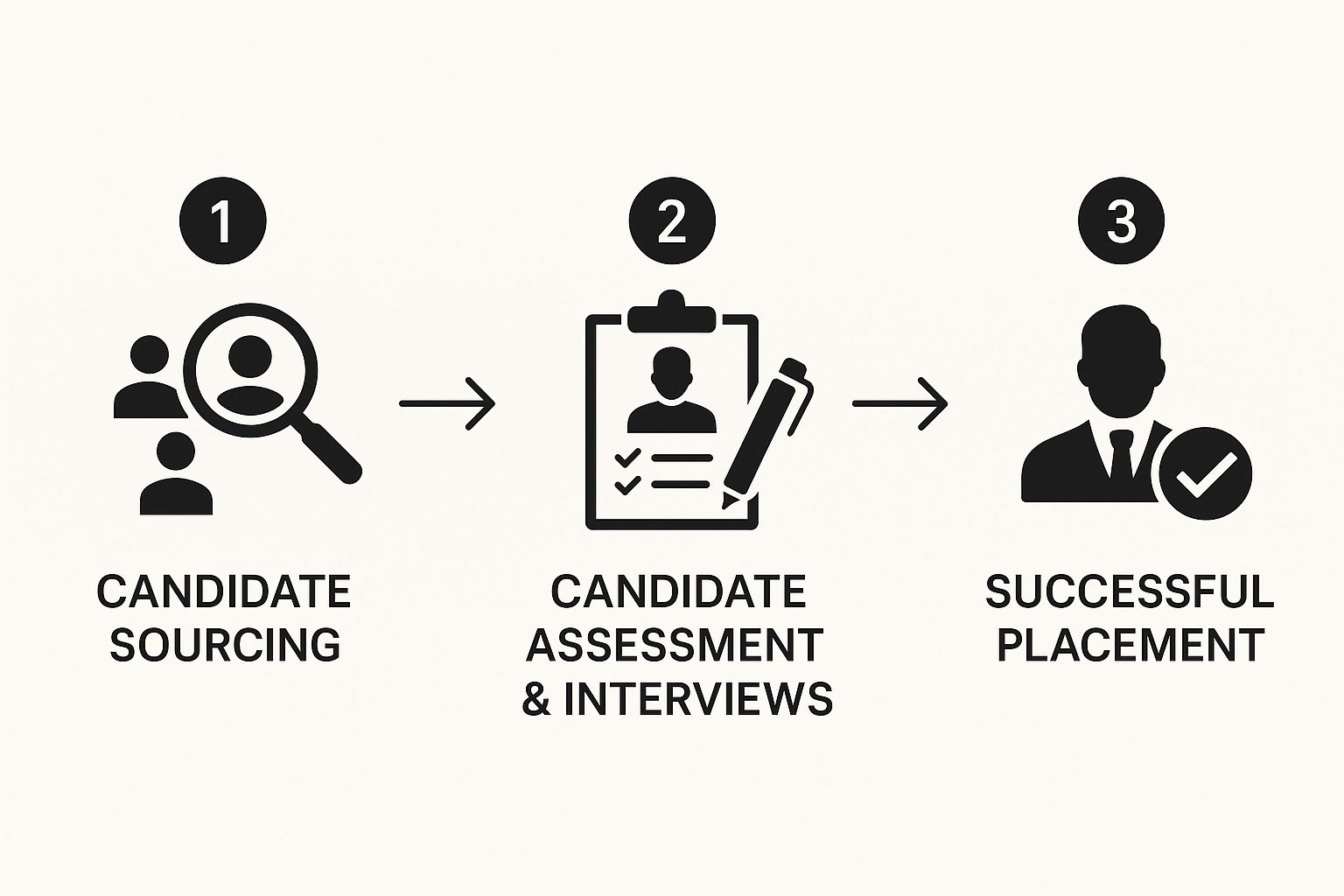
As you can see, the process is designed to systematically narrow down the field, moving from a broad map of the market to a highly refined shortlist.
Assessment and The Final Choice
When a candidate shows genuine interest, they move into a seriously tough vetting stage. This isn’t just one or two interviews; it's a multi-layered assessment that typically includes:
In-depth Interviews: Multiple, structured conversations designed to drill down into their experience, leadership abilities, and behavioural patterns.
Psychometric Assessments: These tools can offer objective insights into a candidate’s cognitive abilities and personality, adding another layer of data.
Comprehensive Referencing: This is crucial. Recruiters conduct thorough, often off-list, reference checks with former bosses, peers, and direct reports to paint a complete 360-degree picture of their performance and reputation.
Finally, the recruiter presents a shortlist of the top three to five fully vetted candidates. From there, they help facilitate the interview process, offer unbiased advice, and even assist in negotiating the final offer. The end goal is a successful hire who can step in and make an immediate impact.
The Strategic Advantages of an Executive Search Partner

Thinking of an executive search firm as just an outsourced recruiter is a common mistake. It’s not about just handing off a task; it's a strategic decision that gives you a genuine competitive edge, turning your hiring from a reactive chore into a powerful business move.
The biggest win? You get a direct line to the 'hidden' talent market. We’re talking about the A-players who aren’t scrolling through job boards. They’re busy, successful, and delivering results where they are. They won't bite on a standard job ad, but they will pick up the phone for a trusted headhunter with a compelling, confidential opportunity.
Getting a Real Read on the Market
A good search partner does more than just find people—they become your eyes and ears on the ground. They bring you real-time intelligence that sharpens your entire hiring strategy. This isn't just generic data; it's specific, actionable insight.
So, what does that actually look like?
Proper Compensation Benchmarking: You’ll find out what it really costs to land the best talent in your industry. This ensures your offer is compelling enough to win, without overpaying.
A Peek Behind the Curtain: You can learn how your competitors structure their leadership teams, who their key people are, and even where they might be weak.
An Honest Look in the Mirror: They provide an unfiltered view of how senior leaders really see your organisation. Is it an employer of choice, or a place to avoid?
This kind of intel allows you to make smarter decisions and position your company as the place where top leaders want to be.
An executive search partner doesn’t just fill a vacancy. They give you a strategic map of the talent landscape, so you can navigate it with confidence. The real value is in the conversations they're having and the information they’re gathering long before you ever see a CV.
Discretion and an Unbiased Voice
Let's face it, high-level leadership changes are sensitive. Whether you’re replacing an executive who isn’t performing or creating a brand-new strategic role, you need absolute discretion. Confidentiality is crucial to maintain morale, manage stakeholders, and stop the rumour mill from spinning. An external partner acts as a crucial buffer, protecting your organisation's reputation throughout the process.
They also bring a much-needed objective perspective to the table. An outside expert helps you cut through internal politics and biases, making sure the final decision is based on one thing only: who is genuinely the best person to lead your company into the future.
Navigating a complex market is vital. The wider UK recruitment sector, for example, has seen permanent placements dip in favour of more flexible staffing. Executive search firms have to adapt to these conditions, where smart technology and even sharper financial management are essential to succeed. You can find more insights on this in the UK recruitment sector outlook on ryecroftglenton.com.
Finally, by handing the heavy lifting of a C-suite search to a specialist, you free up your own people. Your HR team and senior leaders can stay focused on their day-to-day mission, confident that this critical search is in the hands of experts.
Navigating Today's Executive Hiring Challenges
Hiring for the top jobs isn't what it used to be. The whole game has changed, and companies are now navigating a complex maze of new expectations and highly specialised demands. It's no longer enough to find a seasoned leader; you need a visionary who truly gets the forces shaping modern business.
The classic executive profile has been completely redrawn. Suddenly, there's a massive demand for leaders with proven experience in digital transformation, artificial intelligence, and data analytics. These aren't just trendy terms; they're core skills in critically short supply, which makes the hunt for this kind of talent incredibly fierce.
Adapting to a Flexible World
Beyond the technical know-how, the very idea of an executive role is being redefined. The shift to remote and hybrid work isn't a temporary blip—it has permanently changed what top candidates expect from a job. Your ideal leader is now looking for more flexibility, a factor that touches everything from their pay packet to their work-life balance.
To land the best people, companies have to think far beyond the traditional perks. Being open to geographical flexibility is now a major selling point. The conversation has shifted from where a leader is based to the skills and value they can bring to the table, regardless of their postcode.
Today's executive search isn't about slotting a person into a role. It's about matching a modern leader's expectations with the strategic needs of an equally modern organisation. Getting this right is everything.
You can see this playing out across the UK, where the executive search market is set to push past £2.5 billion. A huge part of this growth comes from these new leadership demands, with over 60% of board-level searches now listing AI or data transformation as must-have criteria. On top of that, 72% of UK organisations are now open to hiring leaders from anywhere, putting talent first. You can find more on this in the latest executive search market update at cjpi.com.
Building Diverse and Inclusive Leadership Teams
Another major challenge—which is also a massive opportunity—is the urgent need for more diverse leadership. Smart companies have realised that a C-suite filled with people from the same background is a strategic weakness. Building an inclusive leadership team that brings together a wide range of experiences and perspectives is the only way to drive real innovation and long-term growth.
This means you have to look beyond the usual old-boys' network. And that’s where bringing in a specialist partner can make all the difference.
A good search firm can help you by:
Intentionally looking for talent in places you might have overlooked.
Challenging unconscious bias throughout the hiring process.
Putting forward a diverse slate of candidates who are chosen for their skills and what they add to the culture, not just how well they fit the old mould.
This proactive approach is essential for finding the kind of leaders who will truly push your business forward. If you're thinking about getting external help, you need to know what a modern partner brings to the table. Our guide on hiring an executive search consultant is a great place to start. Getting over these hurdles is what separates the good companies from the great ones.
How to Choose the Right Executive Recruiting Firm

Picking an executive search partner is a massive business decision, one that needs more care than a quick Google search. The right firm isn't just a supplier; they become an extension of your own team and a trusted advisor on one of the most important missions you'll undertake. You have to look past the slick website and find a partner with genuine, hard-won experience in your specific industry.
A proven track record isn't just nice to have—it's essential. Ask to see case studies or speak to references from successful placements in roles similar to yours, both in seniority and function. This is the only way to know for sure that they genuinely understand the unique challenges and talent pool in your sector. In the UK, where skill shortages are a constant headache even at the top, finding a true specialist is more critical than ever.
Evaluating Their Approach and Specialisation
When you start talking to potential firms, really dig into their process. A great partner won't just boast about their "extensive network." They'll walk you through their research strategy, their methods for assessing candidates, and exactly how they make sure someone is a good cultural fit for your organisation. This is where you can separate the pros from the pretenders.
Here are a few questions you should definitely ask:
How do you find and approach top-tier candidates who aren’t even looking for a new role?
What does your communication look like? How often will we get updates on your progress?
Could you describe your vetting process and how you measure for cultural alignment?
Their answers will tell you everything you need to know. Are they offering a simple, transactional service, or are they geared up for a true consultative partnership? Finding that perfect match is vital, especially when you consider that nearly 59% of UK businesses already use recruitment agencies to get past hiring roadblocks. You can get a better sense of the market by looking at these UK HR statistics from cvgenius.com.
The real differentiator isn't the size of a firm's database but the quality of their judgement. You are hiring a partner for their insight and advisory capabilities, not just their sourcing skills.
Understanding the Engagement Model
Finally, you need to get crystal clear on the engagement model. For C-suite and other vital leadership hires, the industry gold standard is a retained search. This is an exclusive arrangement where you pay an upfront fee to secure the firm’s dedicated time and resources for your search. It signals a deep commitment from both sides, all focused on getting the best possible result.
This is a world away from a contingency search, where the firm only gets paid if they successfully place a candidate. While that model can work for more junior roles, it rarely provides the depth, focus, and dedication needed for a high-stakes executive search.
Making the right choice here ensures your partner is fully invested in your company's long-term success. If you're just starting to look, our guide to the top executive search firms in the UK for 2025 is a great place to begin.
Got Questions About Executive Recruiting? We've Got Answers
Even when you see the clear benefits of bringing in an expert, stepping into the world of executive recruiting for the first time can feel a bit daunting. Practical questions naturally pop up. How much does it cost? How long will it take? What’s the difference between a 'headhunter' and an 'executive recruiter'?
Getting a handle on the mechanics is the key to working with a search partner confidently. This FAQ section gives you straightforward answers to the questions we hear most often from business leaders, so you can move forward with clarity and no surprises.
What Does an Executive Search Actually Cost?
This is usually the first question on everyone's mind, and for good reason. It's a significant investment. Unlike standard contingency recruitment, where the recruiter only gets paid if they fill the role, executive searches are almost always done on a retained basis. This model reflects a deep, dedicated partnership where a firm commits significant time and resources exclusively to your search.
The industry standard fee typically lands between 30-35% of the successful candidate's guaranteed first-year cash compensation. That figure includes their base salary plus any guaranteed bonus.
This fee is usually broken down into three payments: one to kick off the search, a second when the shortlist of candidates is presented, and the final payment once the candidate accepts your offer. This structure ensures the search firm is compensated for all the intensive, front-loaded research and advisory work that is crucial for a successful placement.
For very senior roles at large corporations, this fee can easily top £100,000. Think of it not as a cost, but as a strategic investment in securing the kind of leadership talent that will deliver a massive return for your business.
How Long Does the Executive Recruiting Process Take?
Patience is a virtue in an executive search. This isn't about quickly filling a seat in a couple of weeks. A proper, high-quality search is a methodical process, designed to make sure we've looked under every stone to find the absolute best person for the job.
While every search is different, a typical executive search takes between 12 to 16 weeks from start to finish.
Here’s a rough breakdown of how that time is spent:
Weeks 1-4: This is the deep-dive phase. We'll consult with you to build a detailed success profile, map the market, and start our initial research.
Weeks 5-9: Now the real outreach begins. We confidentially identify and contact potential candidates, conduct initial screenings, and perform our own in-depth interviews.
Weeks 10-12: We present you with a fully vetted shortlist of top candidates and help facilitate your interviews with them.
Weeks 13-16: This is the home stretch—final interviews, conducting exhaustive reference checks, negotiating the offer, and securing the candidate's acceptance.
This deliberate pace is essential. It allows for the rigorous vetting and thoughtful decision-making needed when you're making such a business-critical hire.
Is There a Difference Between a Headhunter and an Executive Recruiter?
You'll hear these terms used interchangeably, and for the most part, they mean the same thing. Both describe a specialist who proactively finds, engages, and recruits high-calibre senior leaders—especially those who aren't actively looking for a new job.
'Executive recruiter' is the more modern, formal term that really captures the consultative and strategic nature of the work we do.
'Headhunter' is a more traditional, punchy term that perfectly describes the proactive "hunt" for top talent. So, while the language might differ, both terms point to the same dedicated professional focused on finding your next great leader.
At Talent People, we specialise in connecting high-growth organisations with the visionary leaders and technical experts they need to win. From executive search to full-cycle project hiring in demanding sectors like energy and technology, we deliver agile, embedded recruitment solutions that work. Learn how our deep market intelligence and strategic approach can help you build your high-performing team by visiting us at https://talentpeople.co.

Comments