Master Your Talent Acquisition Strategy Today
- Talent People

- Jul 29, 2025
- 17 min read
A solid talent acquisition strategy isn't just about filling empty seats. It's a long-term game plan for finding, attracting, and bringing on board the right people who will drive your business forward. This means shifting from reactive hiring—scrambling when someone leaves—to proactively building a pipeline of talent that ensures you have the skills you need, especially in fast-moving, project-heavy industries.
Getting to Grips with the UK Talent Landscape

Before you can map out a winning strategy, you have to know the lay of the land. The UK hiring scene right now is a real battleground. There's fierce competition for talent and a major shortage of skilled professionals, which makes a strategic approach not just a 'nice-to-have', but essential for survival.
To put it into perspective, the statistics paint a pretty clear picture of the scale of the challenge. This table summarises the key figures defining recruitment in the UK today.
The UK Recruitment Market at a Glance
Metric | Figure |
|---|---|
Employers Planning to Recruit (2024) | 67% |
Highly-Skilled Worker Shortfall | Approx. 2.5 million |
Annual Cost to UK Businesses | £6.6 billion |
Average Time to Fill a Vacancy | 42 days |
Average Cost Per Hire | £6,125 |
Cost of a Bad Managerial Hire | Up to £132,000 |
These numbers, which you can read more about in this recruitment statistics roundup, show just how tough it is out there. It's a candidate's market, and businesses are paying the price.
The Real Price of Filling a Role
The direct costs of hiring are eye-watering enough. The average time to fill a role is 42 days, and each hire sets a company back around £6,125. But that's just the tip of the iceberg. This figure doesn't even touch on the hidden costs—the lost productivity and project delays while a key position sits empty.
For high-growth companies that live and die by project deadlines, like those in the energy or tech sectors, these delays can be disastrous. Simply waiting for a need to arise before you start looking for talent just doesn't cut it anymore. It’s a recipe for missed deadlines and lost revenue.
A bad hire at the management level can cost a business up to £132,000. That number alone should be enough to convince anyone that a rushed, poorly planned hiring process is a massive risk.
Why the Old Ways No Longer Work
In a market where candidates hold the power, the old "post and pray" method of recruitment is dead. Just sticking a job ad on a board and waiting for the applications to roll in is a surefire way to get left behind.
Think about it. The best people, especially those with sought-after technical skills, are usually not actively looking for a job. They’re already employed, probably doing great work, and they certainly aren't spending their evenings scrolling through job sites.
What's more, today's candidates expect a completely different experience. They're looking for:
Honesty: They want clear, upfront information about the role, the salary, and what it’s really like to work at your company.
A Personal Touch: Nobody wants to feel like just another number in a database. A personalised process that acknowledges them as an individual goes a long way.
Efficiency: Candidates have little patience for long, drawn-out hiring processes. They appreciate quick, respectful communication and timely feedback.
Slow, clunky, and impersonal recruitment methods fail on every single one of these points. They create a negative experience, tarnish your employer brand, and mean you lose the best candidates to your more nimble competitors. This is exactly why you need a well-thought-out talent acquisition strategy. It lets you build relationships and create a pipeline of interested, qualified people before you even have a vacancy to fill.
Building an Employer Brand That Gets You Noticed

In a market flooded with job openings, your employer brand is what makes you stand out. It’s your reputation as a place to work, and frankly, it’s your most powerful tool for attracting the right people.
Think of it as the story you tell about what it's really like to work at your company. This story is what convinces a top-tier candidate to choose you over a competitor, often long before you even post a job advert.
A strong brand is so much more than a polished careers page. It’s built from every single interaction someone has with your business—from a post they see an employee share on LinkedIn to the feeling they get during an interview. It's the tangible sense of your culture, your values, and your mission in action.
What’s Your Promise? Defining Your Employee Value Proposition
At the core of any magnetic employer brand is your Employee Value Proposition (EVP). This is the promise you make to your team. It clearly spells out the unique benefits and rewards an employee gets in return for bringing their skills and experience to your table.
Essentially, your EVP is your company’s “why.” Why should a talented project manager or an in-demand developer join your team instead of the dozens of others knocking on their door?
To figure this out, you need to look inward. Ask yourself and your current team some honest questions:
What makes the work we do here actually meaningful?
What genuine opportunities for growth do we provide?
How do we really support a healthy work-life balance?
What’s our day-to-day culture like, warts and all?
The answers you get are the bedrock of your EVP. This isn’t about creating a clever marketing slogan; it’s about capturing an authentic truth about your company that you can deliver on, day in and day out. For a deeper dive, our guide on employer branding for recruitment can help you sharpen your approach.
Turn Your Promise into Authentic Stories
Once you’ve defined your EVP, it’s time to bring it to life. People don’t connect with corporate buzzwords; they connect with genuine stories. And who better to tell those stories than your own employees?
Employee advocacy is a non-negotiable part of modern talent acquisition. Encourage your team to share their real experiences—a project they’re proud of, a training course that made a difference, or even just a snapshot of a typical day in the office.
Imagine a project-based firm in the renewables sector. An engineer writing a short blog post about their experience on-site at a ground-breaking wind farm is infinitely more powerful than a generic job ad mentioning "exciting opportunities."
Your employer brand is what people say about you when you're not in the room. By empowering your employees to share their authentic stories, you can shape that conversation and build a reputation that truly reflects your values.
The current UK talent market makes this crystal clear. Hiring has ramped up significantly, with 68% of UK employers planning to recruit. The problem? A staggering 79% of them are struggling to find people with the right skills. This skills gap means companies have to work harder to attract talent. In fact, a 2024 survey revealed that 55% of UK job seekers now consider company culture a top factor in their decision-making.
Team Up with Marketing for Real Impact
Your recruitment team can't build an employer brand in a vacuum. A close partnership with your marketing department is absolutely essential. Marketing professionals are masters of storytelling, content creation, and reaching specific audiences—skills that translate perfectly to attracting talent.
Join forces with them to:
Create magnetic content: Work together on videos, articles, and social media posts that showcase your culture and EVP.
Fish in the right ponds: Use data to figure out where your ideal candidates hang out online. Is it LinkedIn, niche industry forums, or professional networks?
Keep it consistent: Ensure the messaging, tone, and visuals in your recruitment efforts align perfectly with the overall company brand.
When you start treating candidates like valued customers and apply proven marketing principles to your outreach, you create a compelling and seamless brand experience. This strategic alignment transforms your talent acquisition function from a cost centre into a powerful engine for business growth.
Designing a Proactive Multi-Channel Sourcing Plan

Let's be honest. Simply posting a job advert and hoping for the best is a strategy from a bygone era. For any high-growth company, especially one juggling multiple projects, this reactive approach just won't cut it. You need to be actively hunting for talent, not just waiting for it to knock on your door.
The aim is to build a talent pipeline that’s both diverse and resilient, so you’re never relying on a single source. When one channel inevitably runs dry, you need others that are already flowing. This means thinking beyond the usual job boards and building a dynamic sourcing engine that’s always on the lookout for great people, whether they’re actively job-seeking or not.
Moving Beyond the Job Board
Job boards have their place, but they mostly attract people who are already looking for a job. The real game-changers, particularly for senior or highly specialised technical roles, are often passive candidates. These are the high-performers who are content in their current roles and aren't scrolling through job listings.
To reach them, you have to go where they are. Professional networks like LinkedIn are absolutely essential for this. But it’s about more than just posting jobs; it requires genuine, strategic engagement. You need to join industry-specific groups, contribute to relevant discussions, and use the platform's advanced search tools to pinpoint individuals who match your ideal profile. Personalised outreach is everything here – a lazy, copied-and-pasted message will be deleted without a second thought. Your message needs to prove you’ve done your homework and actually understand their expertise.
A truly proactive sourcing plan means you’re building relationships before a role even exists. By engaging with talent in their natural professional habitats, you establish your company as an employer of choice and create a warm pipeline for future needs.
Tapping into Your Internal Network
One of the most potent—and frequently overlooked—sourcing channels is right under your nose: your own team. Employee referral programmes can be an absolute goldmine for high-quality candidates. After all, they’re pre-vetted for cultural fit by someone you already trust.
But a successful programme needs more than just a token cash bonus. To really make it work, you need to:
Make it easy: Give your employees clear information about open roles and a straightforward way to submit referrals. Don't make them jump through hoops.
Offer meaningful incentives: While money is a good motivator, think bigger. Could you offer extra holiday days or public recognition for successful referrals?
Communicate transparently: Keep the referring employee in the loop about their candidate's progress. Nothing kills enthusiasm faster than sending a referral into a black hole.
A well-oiled referral scheme can dramatically slash your time-to-hire and cost-per-hire, making it a cornerstone of any efficient talent strategy.
Adapting Your Approach for Different Roles
A one-size-fits-all sourcing plan is doomed to fail. The tactics you use to find a graduate project coordinator are worlds away from what’s needed to attract a senior engineering director with a niche skillset in the renewables sector.
For junior or entry-level roles, things like university partnerships, graduate career fairs, and targeted social media campaigns can be incredibly effective. Here, the goal is to cast a wide net to reach motivated individuals at the beginning of their careers.
For senior and executive positions, however, you need a far more targeted, high-touch approach. This often involves:
Direct Headhunting: Proactively identifying and engaging top performers at competitor companies.
Executive Search Firms: Partnering with specialists who have deep networks and credibility within a specific industry.
Niche Industry Events: Attending conferences and seminars to network directly with senior leaders.
Thinking Globally to Fill Local Gaps
For UK firms, the talent pool doesn't have to stop at the border, particularly when you’re facing critical skills shortages. The post-Brexit landscape has fundamentally reshaped talent mobility in the UK, forcing many to look globally to fill vital positions.
Government data backs this up. Between 2019 and 2024, the UK saw a staggering 45% increase in skilled worker visas granted. A significant portion of this growth came from targeted outreach to countries like India and the Philippines to address specific skill gaps. Today, knowing how to navigate the visa sponsorship process is a crucial skill for any UK-based talent acquisition team. You can find more details on these evolving HR and talent trends.
This global outlook is essential for building a resilient workforce. By combining these different channels, you create a robust sourcing machine that consistently feeds your pipeline, ensuring your organisation is always ready to staff up for the next big project.
Optimising Your Hiring Process with Tech and Data
In today's fast-paced world, running a top-tier talent acquisition strategy on spreadsheets and gut feelings just won't cut it. To stay ahead, especially in project-based environments, you need to lean on smart technology and hard data. The goal isn't just to work harder; it's to work smarter by automating the repetitive, admin-heavy tasks that slow you down. This frees up your team to do what they do best: connect with great people.
For most, the journey starts with a solid Applicant Tracking System (ATS). Think of it as your recruitment command centre. An ATS organises the entire hiring journey, from the moment a candidate applies to the final offer. It’s the difference between a streamlined, professional process and a chaotic mess of inboxes and spreadsheets where brilliant candidates can easily get lost.
Choosing the Right Technology for Your Team
The market is flooded with recruitment tech, and it's easy to get distracted by flashy features. The real secret is to pick tools that solve your actual problems. For firms that live and die by project deadlines, that usually means tools that bring speed and efficiency to the table.
Before you start shopping, take a hard look at your current hiring workflow. Where are the delays?
Is screening CVs a major time sink? AI-powered screening tools can be a game-changer, helping you quickly surface candidates who meet your non-negotiable criteria.
Struggling with the back-and-forth of scheduling interviews? Automated scheduling software can sort this out in minutes, saving everyone a headache.
Need to be certain a candidate has the technical chops? There are brilliant platforms out there offering skills assessments designed for specific roles, so you can verify abilities early on.
This isn't just theory; it's common practice. An estimated 70% of large companies already use an ATS to manage their applicant pipeline. And with 43% of businesses using some form of AI in their interview process, it's clear the shift is well underway. You can find more detail on these and other UK recruitment statistics from Standout-CV.
The talent acquisition landscape has evolved significantly. What worked a decade ago is often inefficient today. Modern strategies prioritise data, candidate experience, and proactive sourcing over older, more reactive methods.
Modern vs Traditional Talent Acquisition Approaches
Component | Traditional Approach | Modern Strategy |
|---|---|---|
Sourcing | Post and pray on general job boards. | Proactive outreach, building talent pools, targeted sourcing. |
Technology | Spreadsheets, basic ATS for storage. | Integrated tech stack (ATS, CRM, AI screening, analytics). |
Decision Making | Gut feelings, interviewer bias. | Data-driven decisions based on key performance metrics. |
Candidate Experience | Transactional, often a "black hole" for applicants. | Personalised, transparent, and focused on building relationships. |
Metrics | Basic time-to-hire, cost-per-hire. | Quality of hire, source effectiveness, candidate satisfaction. |
Embracing these modern approaches is key to building a resilient and effective hiring function that can keep up with the demands of a high-growth business.
Making Data Your Most Valuable Asset
Technology does more than just speed things up; it generates the data you need to get smarter. A truly effective talent acquisition strategy is never static. It's constantly evolving based on what the numbers are telling you. By digging into recruitment analytics, you can move beyond guesswork and pinpoint exactly what's working and what needs fixing.
Data transforms hiring from a series of one-off tasks into a measurable, strategic part of the business. It gives you the proof you need to justify your methods, secure more budget, and demonstrate your team's impact.
The trick is to focus on the metrics that matter—the ones that give you a true picture of your hiring health. This infographic breaks down three of the most crucial ones to watch.
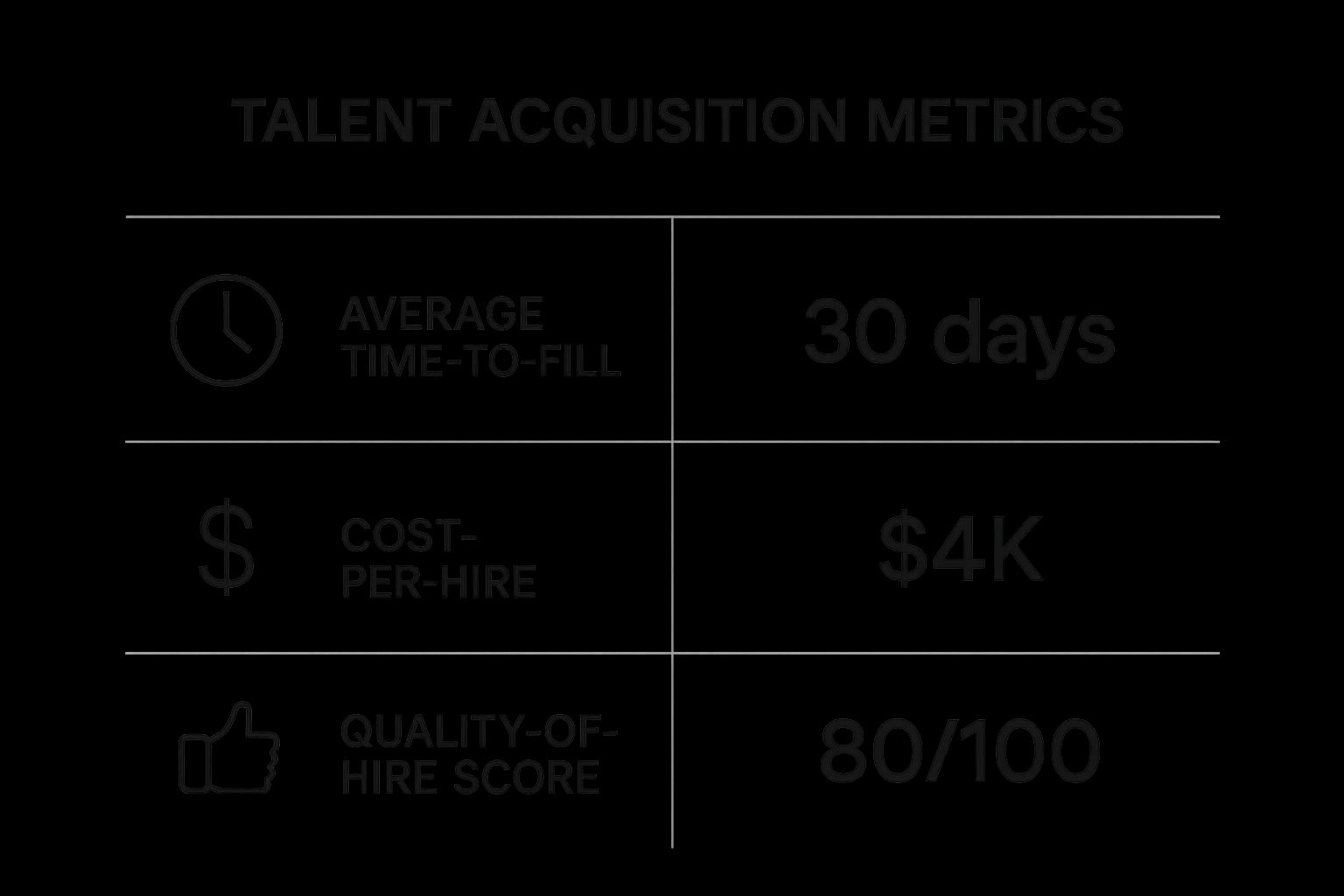
Tracking these core numbers gives you a powerful, high-level dashboard of your performance. It helps you spot trends and tackle issues before they have a chance to disrupt a critical project.
Key Metrics to Guide Your Strategy
While you can track dozens of things, focusing on a vital few will give you the most bang for your buck. In addition to the big three above, I always recommend keeping an eye on these:
Source of Hire: Where are your best people coming from? Knowing whether it's LinkedIn, a niche job site, or employee referrals tells you where to invest your time and money.
Candidate Satisfaction (cNPS): What was the experience like for your candidates? A negative experience can tarnish your employer brand, but a great one can turn people you didn't hire into brand ambassadors.
Offer Acceptance Rate: If you're losing great candidates at the final hurdle, this metric is a red flag. It could point to issues with your salary benchmarks, benefits, or even something in the interview process itself.
When you start analysing this information, you shift from being reactive to proactive. For instance, if your data clearly shows that employee referrals lead to the highest quality of hire, it's a no-brainer to invest more in your referral programme. That's the core of a data-driven approach.
If you're ready to put this into action, our guide on data-driven recruiting for modern hiring offers practical steps. By marrying the right technology with sharp data analysis, you build a powerful, efficient, and constantly improving talent acquisition engine.
Crafting an Unforgettable Candidate Experience
In a market where top professionals have their pick of roles, the way you treat candidates becomes your secret weapon. A truly effective talent acquisition strategy hinges on creating a positive, memorable journey for every applicant. This isn't just about common courtesy; it's a strategic move to protect and amplify your employer brand.
Think about it from their perspective. The experience starts the moment they see your job advert and continues through every email, phone call, and interview. A bad experience—long silences, chaotic interviews, or vague feedback—doesn't just lose you one great candidate. It can poison the well, damaging your reputation across their entire professional network.
From First Click to Final Feedback
The first thing you need to do is map out the entire candidate journey. Look at every single touchpoint and ask a simple question: "How can we make this interaction better, clearer, and more respectful for the person on the other end?"
Start with the fundamentals. Acknowledge every single application. An automated email confirmation is the bare minimum, but it’s far better than radio silence. From there, be upfront about what they can expect. Be honest about your hiring timeline, the different stages involved, and who they’ll be speaking with. People appreciate transparency, even if the process is a bit longer than they’d hope.
Your goal should be simple: ensure that even the candidates you don't hire walk away with a deep respect for your organisation and your process. A positive experience can turn an unsuccessful applicant into a future customer, a source of referrals, or even a brand advocate.
This approach has never been more critical. The UK workforce's priorities are shifting, and recruitment strategies must adapt. People are now placing a massive emphasis on flexibility and a healthy work-life balance, sometimes valuing it even more than a bigger pay cheque. Salary transparency has also become a non-negotiable for many, with most successful job posts now including pay information to attract serious talent. You can dig into more of these trends in this UK labour market report from Recruitics.
The Power of a Personal Touch and Clear Communication
While generic, automated messages have their place for efficiency, they can feel cold and impersonal. A little bit of personalisation can make a world of difference. When a recruiter mentions a specific project from a candidate’s portfolio or a unique point on their CV, it instantly shows you’ve done your homework. It tells them they're being seen as an individual, not just another name in a spreadsheet.
Transparency is just as important, especially when it comes to money. Be upfront about the salary range from the get-go. This simple act respects the candidate’s time and stops both sides from going down a path that was never going to work out. Avoiding the salary conversation only breeds frustration and mistrust.
To take your process to the next level, check out our complete guide on how to improve the candidate experience with top strategies and tips. It's full of practical advice you can implement immediately.
Your Hiring Managers are Your Brand Ambassadors
Your hiring managers are on the front line. They are the face of the company during the most critical stages. A fantastic manager who is a terrible interviewer can single-handedly sabotage your efforts to land the best people. It's not enough for them to be good at assessing skills; they must also be compelling ambassadors for your brand.
Make sure your training for hiring managers covers the essentials:
Running a structured interview: This creates a fair and consistent process for everyone, while still leaving room for a natural conversation to flow.
Selling the vision: Managers must be able to paint a vivid picture of why your company is a brilliant place to work and what makes their specific role a compelling opportunity.
Championing the candidate experience: This means being on time, being prepared, and creating a welcoming atmosphere that puts people at ease.
Finally, providing constructive and timely feedback is non-negotiable. For candidates who aren't successful, offering a brief, respectful reason for your decision shows a high level of professionalism. It’s often this final touch that separates a detractor from a future advocate.
Frequently Asked Questions About Talent Acquisition
When you're deep in the world of talent acquisition, questions are bound to come up. Here are some of the most common ones I hear, with straightforward answers to help you build and defend your strategy with confidence.
How Do I Measure the Success of My Talent Acquisition Strategy?
It's easy to fall into the trap of measuring success by how quickly you fill a role. But time-to-hire, while a decent efficiency metric, tells you nothing about the actual quality or long-term impact of the person you just brought on board.
To really understand if your strategy is working, you need a more balanced view. I always advise clients to track a handful of key performance indicators (KPIs) that give a complete picture.
Here are the metrics that truly matter:
Quality of Hire: This is the big one. How well does a new hire perform? Do they fit the culture? You can measure this through performance reviews or simple manager feedback surveys after their first 6-12 months.
Source of Hire: You need to know which channels are bringing you your best people. If you find your employee referral programme delivers fantastic hires who stick around, that’s a clear sign to invest more time and resources there.
Cost per Hire: An oldie but a goodie. You still need to manage your budget. This metric simply totals up all your recruiting costs—adverts, agency fees, even your team’s time—and divides it by the number of people you hired.
Candidate Net Promoter Score (cNPS): This one’s all about the candidate experience. It’s a simple survey asking applicants how likely they are to recommend your hiring process to others. A high score is a brilliant indicator of a strong brand reputation.
Keeping a close eye on these KPIs gives you the data you need to prove the value of your work and make smart adjustments along the way.
What Is the Difference Between Talent Acquisition and Recruiting?
People use these terms interchangeably all the time, but they’re fundamentally different. Getting the distinction right is the first step toward building a truly forward-thinking hiring function.
Recruiting is tactical. It’s a short-term sprint to fill a specific, open role. The finish line is clear: get a qualified person to sign on the dotted line.
Talent acquisition is the long game. It’s a strategic, continuous process of identifying, attracting, and nurturing relationships with the kind of people your company will need in the future. It’s less of a sprint and more of a marathon that never really ends.
A simple way I explain it is that recruiting fills seats, while a talent acquisition strategy builds a winning team. It’s about more than just filling jobs; it’s about employer branding, building talent pipelines, and workforce planning.
How Can a Small Business Implement an Effective Strategy on a Budget?
You don’t need a massive budget to have a brilliant talent acquisition strategy. In fact, smaller businesses can be incredibly effective by being clever and focusing on high-impact, low-cost moves.
First, go all-in on your employer brand. Use free tools like your company website, a blog, or your LinkedIn profile to tell real stories about your culture and what you’re trying to achieve. Show people what makes your company a genuinely great place to work.
Next, build a killer employee referral programme. This is almost always the most cost-effective way to find excellent candidates. Your own team is your most trusted and powerful marketing channel—use it!
Finally, don’t underestimate the power of non-monetary perks. For many people, things like real work-life balance, flexible working, and clear opportunities to learn and grow are worth more than a slightly bigger salary. Always make the candidate experience exceptional; positive word-of-mouth is priceless.
How Often Should We Review Our Talent Acquisition Strategy?
Your talent acquisition strategy should be a living, breathing thing—not a document you create once and then file away to gather dust. The job market changes constantly, so you have to stay agile.
I recommend a deep-dive review of your entire strategy at least annually. This should tie directly into the company’s main business goals for the year ahead, making sure your hiring efforts are pulling in the same direction as everyone else.
But don't wait a full year to check in. You should be looking at your core KPIs far more often, ideally on a quarterly basis. This allows you to spot trends early, see if a sourcing channel is underperforming, and tweak your approach on the fly. This rhythm of annual planning and quarterly adjustments is what keeps a strategy sharp and effective.
Are you ready to build a high-performing team that can accelerate project delivery and drive business growth? Talent People is a specialist recruitment consultancy that partners with high-growth organisations to deliver agile, project-based hiring solutions. Discover how our embedded talent services can future-proof your workforce today.

Comments