Oil and Gas Staffing Guide: Find Top Talent & Market Insights
- Talent People

- Aug 13, 2025
- 14 min read
Oil and gas staffing isn't your average recruitment. It’s the specialised craft of finding, vetting, and mobilising the right professionals for complex energy projects. Forget simply filling a vacancy; think of it more like assembling the crew for a critical mission, where every single person is essential for safety, efficiency, and success.
Why Strategic Oil and Gas Staffing Is Essential
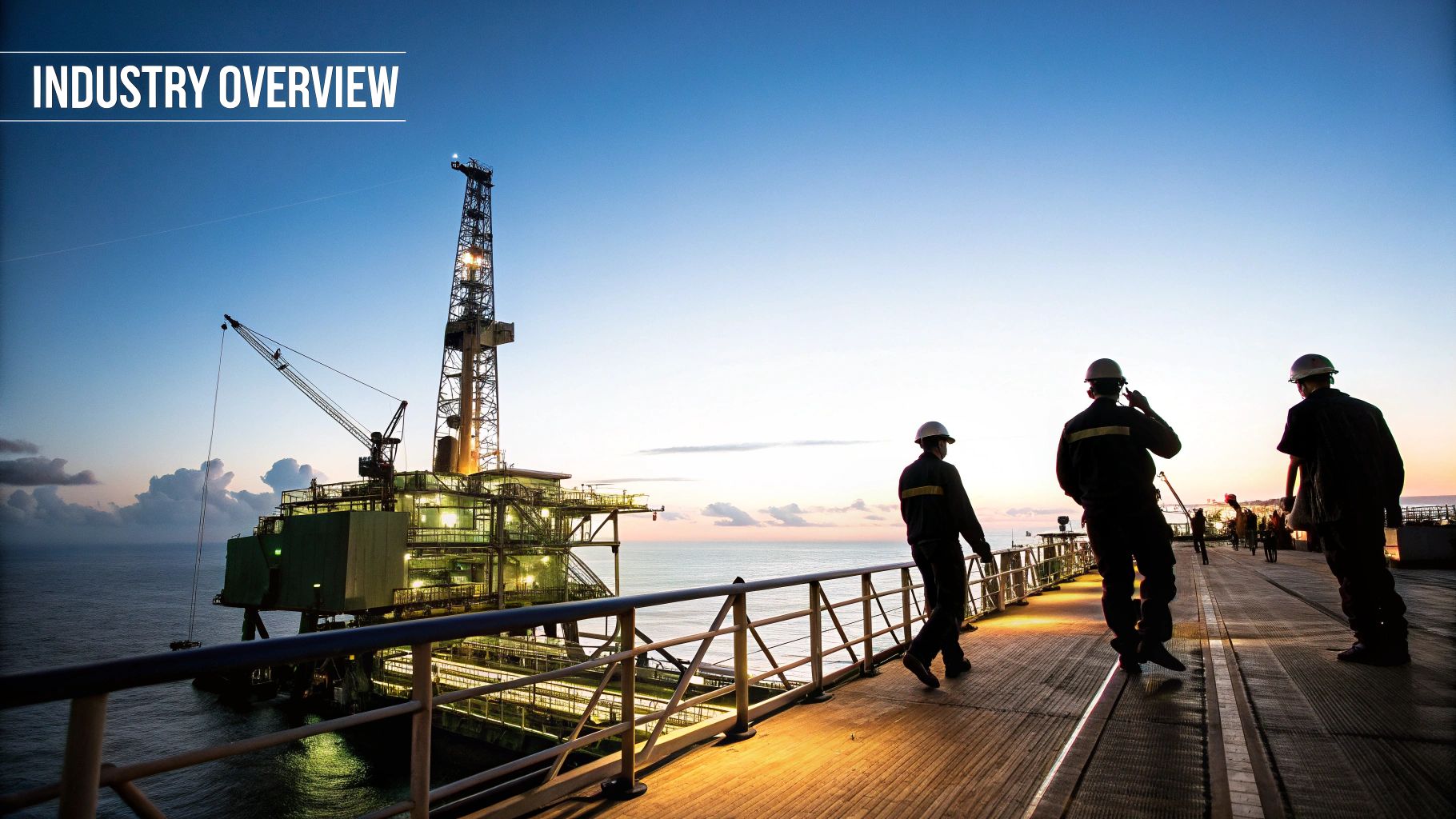
Treating staffing as a strategic function is a game-changer. It’s like managing a high-performance racing team. You wouldn’t just put any driver in the car; you need someone with the perfect blend of experience, reflexes, and temperament for that specific track. In the same way, every energy project—from a new North Sea platform to an onshore decommissioning site—demands a carefully curated team.
Success depends entirely on having the right experts in place at exactly the right time. A project might kick off with a geophysicist for exploration, move on to drilling engineers for the execution phase, and require dedicated safety officers to keep everything compliant. Each role is a vital cog in an incredibly complex machine.
The Role of a Specialist Staffing Partner
A specialist agency is your team manager. They are the ones who meticulously scout and select the best 'players' for every single position. They live and breathe the industry, so they already have a network of proven, highly skilled professionals ready to go. This means projects aren't just staffed; they're set up for success right from the start.
This proactive approach is vital in an industry known for its ups and downs. Market fluctuations and the global shift towards new energy sources mean companies have to be incredibly agile. A flexible, skilled workforce is no longer just nice to have—it's a fundamental part of staying resilient and protecting the UK's energy security.
The numbers tell the story. Between 2019 and 2023, employment in the UK oil and gas sector saw significant shifts, with jobs in direct and support services falling from roughly 30,400 to 27,500. This volatility makes dynamic workforce planning absolutely essential.
To help clarify these core ideas, here’s a quick overview of the key concepts you'll encounter.
Key UK Oil and Gas Staffing Concepts at a Glance
Concept | Description | Primary Focus |
|---|---|---|
Contract Staffing | Deploying skilled professionals for a defined project or period. | Flexibility, project-based needs, specialised skills. |
Permanent Recruitment | Sourcing and placing candidates into full-time, long-term roles. | Building a core team, long-term growth, cultural fit. |
Managed Service Provider (MSP) | Outsourcing the management of all contingent labour to a single partner. | Efficiency, cost control, compliance, process standardisation. |
Recruitment Process Outsourcing (RPO) | Outsourcing all or part of the permanent recruitment process. | Scalability, access to talent pools, reducing time-to-hire. |
Understanding these different models is the first step toward building a workforce strategy that truly fits your organisation's needs.
Securing Your Project’s Future
At the end of the day, strategic staffing is about managing risk and seizing opportunities. It helps you avoid costly project delays caused by skills gaps and ensures your operations run without a hitch. By working with experts, companies can build teams that are not only technically brilliant but also fully aligned with a safety-first culture.
A well-staffed project is a safer, more efficient, and more profitable project. It turns talent acquisition from a reactive headache into a proactive competitive advantage, protecting your operations from market shocks.
This approach lets your core team concentrate on the big picture while your staffing partner handles the intricate details of recruitment, compliance, and contractor management. For a deeper look at building your dream team, check out our comprehensive UK oil and gas recruitment guide. This kind of partnership is key to navigating the challenges and opportunities that lie ahead.
Right, let's break down the major headaches in energy recruitment today.
Tackling the Biggest Hurdles in Energy Recruitment
The UK’s energy sector is facing a perfect storm of staffing problems. It’s not just one single issue, but a combination of factors that are putting real pressure on everything from day-to-day operations to long-term growth. To put it simply, finding the right people has never been harder, or more important.
At the very core of this is something the industry calls the 'great crew change'. Think of it like this: an entire generation of seasoned pros—the engineers, geoscientists, and technicians who have kept the lights on for decades—are heading for retirement. They’re taking an immense amount of hands-on, irreplaceable knowledge with them, leaving a huge experience gap in their wake.
This isn't just about filling empty seats. It’s about replacing the kind of expertise you only get from years on the job. A project can grind to a halt without a veteran geologist who can make sense of tricky seismic data. A production platform’s safety and efficiency can be compromised if there aren't enough senior technicians who know the quirks of its specific equipment inside and out.
The Generational Divide and Shifting Perceptions
Making matters worse, there's a serious image problem. Younger people just aren't looking at oil and gas careers in the same way. Many see the industry as unstable or out of step with their environmental values, making a job in tech or renewables feel like a much better bet.
The numbers back this up in a big way. By 2029, Gen Z and Millennials are set to become 72% of the global workforce. The problem? A staggering 62% of them say a career in oil and gas just doesn't appeal to them. This isn't some far-off issue; it's happening now. Projections show this skills gap could lead to a shortfall of up to 40,000 skilled workers in the UK energy sector by 2025. You can dig deeper into these figures in a detailed workforce report from IOGP.
Navigating Uncertainty During the Energy Transition
The worldwide push towards cleaner energy adds another layer of complication. While the transition is vital, it creates a lot of uncertainty for the traditional oil and gas sector. People just starting their careers are asking tough questions about the long-term job security in roles tied to fossil fuels.
This uncertainty causes a knock-on effect:
Hesitant Investment: Companies think twice before funding big exploration projects, which naturally limits new job openings.
Career Path Confusion: A young engineer might look at a role in wind or solar and see a clearer, more secure future.
Skills Mismatch: The industry now needs a hybrid skillset—people who understand traditional extraction but are also skilled in new, greener technologies. That talent is incredibly rare.
The real test is managing continuity while adapting to massive change. Companies need to find a way to pass the torch from one generation to the next, all while the industry itself is being reshaped by the energy transition.
Overcoming these challenges means throwing out the old recruitment playbook. Just posting a job ad and waiting for CVs to roll in won't cut it anymore. Companies need to be proactive. This means building an employer brand that people actually want to work for, showing clear career paths, and proving they are a key part of a stable and diverse energy future. It’s about showing how skills learned in oil and gas are not just relevant, but essential for the energy systems of tomorrow.
Choosing the Right Staffing Model for Your Project
How you build your team is every bit as important as who you hire. In the world of oil and gas, getting your staffing strategy right can be the difference between a project that runs like clockwork and one that’s plagued by costly delays.
Think of it like building a house. You wouldn't use the same approach for a simple extension as you would for a custom-built mansion. It's the same in our industry. The needs of a short-term drilling campaign are miles apart from managing a major asset for the next ten years. Let's walk through the main ways companies build their teams to see which one fits you best.
Direct Hire: The Permanent Foundation
A direct hire, also known as permanent recruitment, is like bringing your own architect onto the payroll. They become a core part of your company, fully invested in your long-term vision and culture. They grow with you, carrying their knowledge from one project to the next.
This approach is perfect for building your foundational team—the managers, leaders, and essential technical experts who are the backbone of your business. It builds loyalty and a deep well of company knowledge. The only catch? The hiring process is usually longer and takes more internal resources, so it’s not ideal when you need someone on-site yesterday.
Contract Staffing: The Specialist for the Job
Contract staffing is like calling in a specialist electrician just for the wiring phase. You need an expert for a specific job with a clear end date. Once their work is done, they move on. This is where flexibility really comes into play.
This model is a lifesaver for situations like:
Project-Specific Needs: Finding a completions engineer just for the well completion phase.
Covering Absences: Bringing in a temporary replacement for a key person on long-term leave.
Urgent Gaps: Quickly getting a safety officer on board to meet immediate compliance needs.
Contracting gives you incredible agility. You can scale your team up or down based on what the project demands, all without the long-term commitment of a permanent employee. It opens the door to a huge pool of specialised talent, right when you need it.
Of course, finding that specialist talent is often easier said than done.
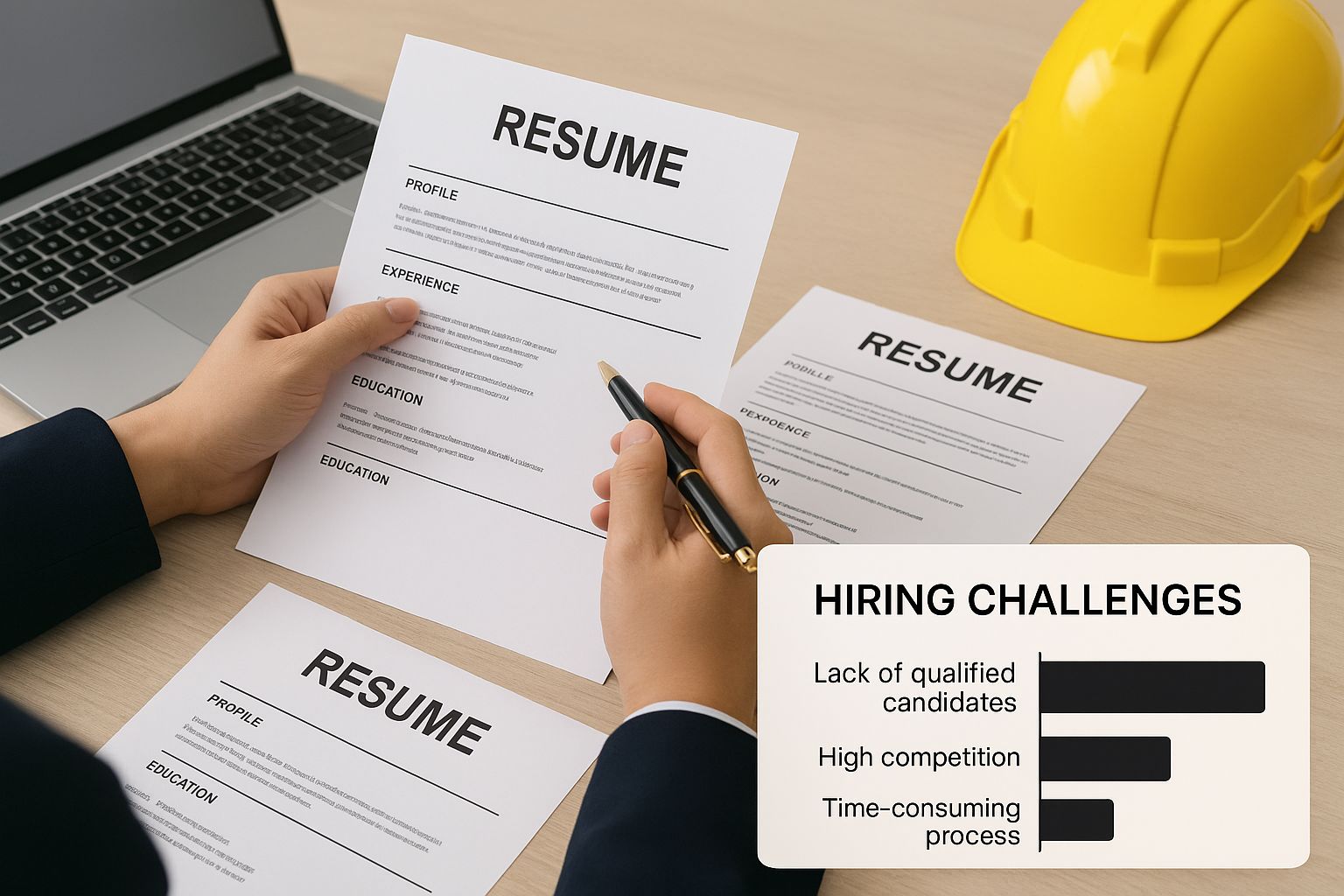
As the image shows, simply locating the right people—whether for a contract or permanent role—is a major challenge in itself, one that often requires expert help to get right.
Managed Services: The General Contractor
A managed service, usually handled by a Managed Service Provider (MSP), is like handing the keys to a general contractor. You tell them what you want—a finished house—and they handle everything else. They find and coordinate all the subcontractors, from the plumbers to the painters, to deliver the final result.
In staffing, an MSP partner manages your entire contract workforce. They take care of sourcing candidates, negotiating rates, ensuring compliance, and handling payroll. This frees up your own team to focus on their core jobs. For companies that rely on a large and complex contract workforce, this model is a game-changer for boosting efficiency, staying compliant, and often saving a significant amount of money.
It's not about which model is "best," but which one is best for the specific task. The most successful companies use a blend, combining a core team of permanent staff with a flexible group of contractors.
To make things clearer, let's compare these models side-by-side.
Comparing Oil and Gas Staffing Models
This table breaks down the primary recruitment models, showing where they shine and what to watch out for.
Staffing Model | Best For | Key Benefit | Consideration |
|---|---|---|---|
Direct Hire | Core leadership and long-term strategic roles. | Builds deep company knowledge and loyalty. | Slower, more resource-intensive hiring process. |
Contract Staffing | Short-term projects and specialised skill gaps. | Unmatched flexibility and speed to hire. | Contractor integration requires careful management. |
Managed Services | Companies with a large contingent workforce. | Efficiency, cost savings, and compliance control. | Requires giving up some direct control over hiring. |
Ultimately, understanding these different oil and gas staffing models gives you the strategic insight to build your project teams in the smartest, most effective way possible. Whether you need a permanent architect, a short-term specialist, or a general contractor to run the whole show, a clear strategy ensures your project is built on solid ground from the start.
The New Skills Powering the Energy Sector
The profile of an energy expert today looks completely different from what it was just a decade ago. Of course, core skills in geology and engineering are still vital, but a whole new set of competencies is needed to drive the sector forward. Successful oil and gas staffing isn't just about finding a good petroleum engineer anymore. It’s about finding adaptable problem-solvers who are comfortable with digital tools and understand the principles of green energy.
This shift means looking beyond the usual qualifications. The most sought-after candidates are those who can connect the physical and digital worlds, using data to make smarter decisions and boost efficiency everywhere.
The Rise of Digital Fluency
In modern energy, digital skills are no longer optional—they're fundamental. Think of data analytics less like an IT task and more like a modern-day sonar, giving teams a way to see what's happening just beneath the surface of their operations. By analysing data streaming from equipment sensors, companies can predict when maintenance is needed before a catastrophic failure, saving a fortune in downtime.
It’s the same story with artificial intelligence (AI), which is now used to fine-tune drilling paths and manage reservoir performance on the fly. This digital literacy is creating brand-new, hybrid roles that simply didn't exist a few years back.
Take a Digital Twin Engineer. Their job is to build a perfect virtual replica of a real-world asset, like an offshore platform. This lets them run simulations, test upgrades, and train crews in a totally safe environment before touching anything in the real world.
Integrating Green Skills into a Brown World
Hand-in-hand with this digital shift is the rising demand for 'green skills'. As the industry works through the energy transition, having expertise in both fossil fuels and renewables is becoming a seriously powerful combination. The future isn't about picking one over the other; it’s about expertly managing a mixed energy portfolio.
This has created a real need for professionals who see the bigger picture. From producing oil and gas as cleanly as possible to safely decommissioning old platforms and weaving wind or solar power into existing grids, these integrated skills are in huge demand.
The most forward-thinking companies are already hunting for candidates with this dual expertise. Here are a few examples of the new hybrid roles popping up:
Decommissioning Environmental Specialist: This person blends knowledge of oil and gas hardware with a deep understanding of environmental rules and clean-up methods. Their goal is to make sure retired assets are taken apart safely with the smallest possible ecological footprint.
Carbon Capture, Utilisation and Storage (CCUS) Engineer: This role mixes traditional reservoir engineering with new knowledge of carbon capture technologies to help shrink the carbon footprint of operations.
Energy Systems Integration Analyst: This expert figures out how to best blend power from different sources—natural gas, wind, solar—into the grid to keep the lights on for everyone.
These jobs show that the industry isn't just changing; it's broadening its horizons. The skills honed in oil and gas—like project management, handling complex logistics, and working in safety-critical environments—are directly transferable and incredibly valuable for building the energy systems of tomorrow. The real challenge for oil and gas staffing is finding these versatile individuals who are ready to work across the entire energy spectrum.
How to Attract and Keep Top Energy Talent

In oil and gas staffing, finding the right people is only half the battle. The real work begins once they’re through the door. You need to create an environment where talented professionals genuinely want to stay, develop their skills, and build a career. In such a competitive market, you’re not just offering a job; you’re selling a vision and a clear future.
This all starts with the first thing a candidate sees: the job description. Ditch the dry list of duties and tell a story instead. Frame the role around its impact. How does this position help secure the UK's energy supply? What part will they play in making a project safer or more efficient? Show them exactly where they fit in the bigger picture.
Building an Efficient and Respectful Hiring Process
Think of your hiring process as a window into your company culture. If it’s slow, disorganised, or impersonal, you’re telling top talent that you don’t value their time. This is where smart technology can make all the difference, from applicant tracking systems that keep everyone updated to video interviews that work around hectic schedules.
The aim is to be efficient without losing that crucial human touch. Keep candidates in the loop, offer constructive feedback, and treat everyone with respect, whether they get an offer or not. Doing so builds a powerful employer brand that will pay you back long after the role is filled.
Retention Strategies That Actually Work
Once you've hired brilliant people, your focus has to pivot entirely to keeping them. This is where so many companies stumble, but a few core strategies can make a world of difference.
Competitive Compensation: This is the bedrock. Your pay and benefits must be at least in line with market rates, if not better, to stop your team from being tempted elsewhere.
Meaningful Upskilling: Don’t just train people for the job they have now; prepare them for the future. This means offering programmes that bridge the gap between traditional oil and gas skills and what’s needed for the energy transition, like renewables integration or carbon capture.
A Powerful Safety Culture: In this industry, safety isn't just a box to tick—it's a core value. A workplace that proves it cares about its people’s well-being fosters a deep sense of trust and loyalty.
When you get these elements right, you create compelling reasons for your best people to stay put. For more practical advice on this, check out our detailed article on how to improve employee retention with effective strategies in the UK.
Case Study in Action: One forward-thinking firm slashed its staff turnover by launching a structured mentorship programme. They paired seasoned engineers with newer hires, creating clear career paths that connected traditional roles with fresh opportunities in renewables. It wasn’t just about passing on knowledge; it showed employees they had a long-term future with the company.
Navigating a Shifting Workforce Landscape
Keeping your talent is made all the more challenging by major shifts in the industry. The UK’s oil and gas workforce, recently at around 115,000, is facing a sharp decline. Projections show a potential drop to between 57,000 and 71,000 jobs by the early 2030s—a fall of nearly 50% in less than a decade.
This contraction makes holding onto your best people more critical than ever before. It’s no longer enough to just fill a roster; you have to build a community. It all comes down to a genuine commitment to growth, safety, and showing every single person that they have a vital part to play in powering our future.
Selecting the Right Oil and Gas Staffing Partner
Choosing an oil and gas staffing agency isn't like picking a vendor off a list. It’s about finding a genuine partner. Think of them as an extension of your own team, the specialists responsible for bringing in the talent that keeps your operations safe, on time, and within budget. Get this wrong, and the knock-on effects can be significant.
You wouldn’t let an unqualified technician work on a critical piece of equipment, would you? The same principle applies here. Your staffing partner needs to have real, boots-on-the-ground experience in the energy sector. They must instinctively know the difference between a subsea engineer and a drilling supervisor and, crucially, where to find them.
Vetting Potential Partners
A top-tier agency does far more than just flick CVs into your inbox. They should have a proven, mobilised network of qualified candidates and an ironclad understanding of safety protocols and compliance rules. This is especially true for complex UK regulations like IR35, which dictates how contractors are taxed and can be a minefield if handled incorrectly.
To sort the experts from the generalists, you need to ask the right questions. Don't hesitate to really dig into their processes and past performance.
Questions to Ask a Potential Staffing Agency:
Industry Specialisation: Can you give me some recent examples of similar roles you’ve filled for other energy companies?
Candidate Network: How exactly do you find and check your candidates to make sure they have the right skills and safety certifications?
Compliance and Safety: Walk me through your process for managing contractor compliance, including IR35 assessments and safety training.
Track Record: Do you have any case studies or references that show you can deliver on complex, high-stakes projects?
Contractor Management: What support do you offer your contractors once they’re on-site to keep them performing well and sticking around?
Their answers will quickly tell you if you’re speaking with a true specialist or a recruitment firm that’s just trying its hand in a highly technical market. A real partner invests in their contractors, offering support that keeps turnover low and satisfaction high. In fact, one study showed a firm saved $600,000 annually just by reducing "bad attrition" through better contractor care.
The Value of a True Partnership
Ultimately, you’re looking for an agency that operates beyond simple transactions. A great partner helps you look around the corner, anticipating future talent gaps and proactively building a pipeline of candidates before you even have a vacancy. In a market that’s always in flux, that kind of foresight is priceless.
A genuine staffing partnership gives you a competitive edge. It turns recruitment from a reactive headache into a strategic advantage, helping you navigate the energy market's complexities with confidence.
By taking the time to choose carefully, you’re securing more than just people for a project. You’re gaining a trusted advisor who gets your business and is committed to your success. To build an effective hiring framework, you can learn how to master your talent acquisition strategy today with our in-depth guide.
Ready to build a high-performing team for your next energy project? Talent People specialises in delivering agile, project-based hiring solutions for complex markets. Get in touch with us to see how we can help you hire faster and future-proof your workforce.

Comments